Catalysing Action – Six Actions to Turn Climate Ambition into Implementation for Enduring Value
As COP31 gets underway, attention is turning to what it will take to move climate action from ambition to implementation.
For the built environment, the challenge is translating targets into decisions about how assets are funded, designed, delivered, operated and adapted.
How can owners decarbonise ageing assets without disrupting operations? When should institutions invest in electrification? These decisions affect operational performance, development viability and long-term asset value.
Insights shared by SJ Group leaders at Greenbuild International Conference and Expo in New York, the VU Summit 2026 in London and the Biophilia Summit point to six actions for moving from climate ambition to implementation.
-
Plan for performance beyond handover
Climate stress is increasingly an everyday operating condition for buildings. At the same time, owners and operators are managing ageing systems, rising expectations and limited resources.
Many maintenance inefficiencies and instances of performance drift can be influenced by decisions made before an asset is occupied. Operational, maintenance and resilience requirements therefore need to be defined alongside capital cost and programme objectives, while project teams still have scope to influence the design.
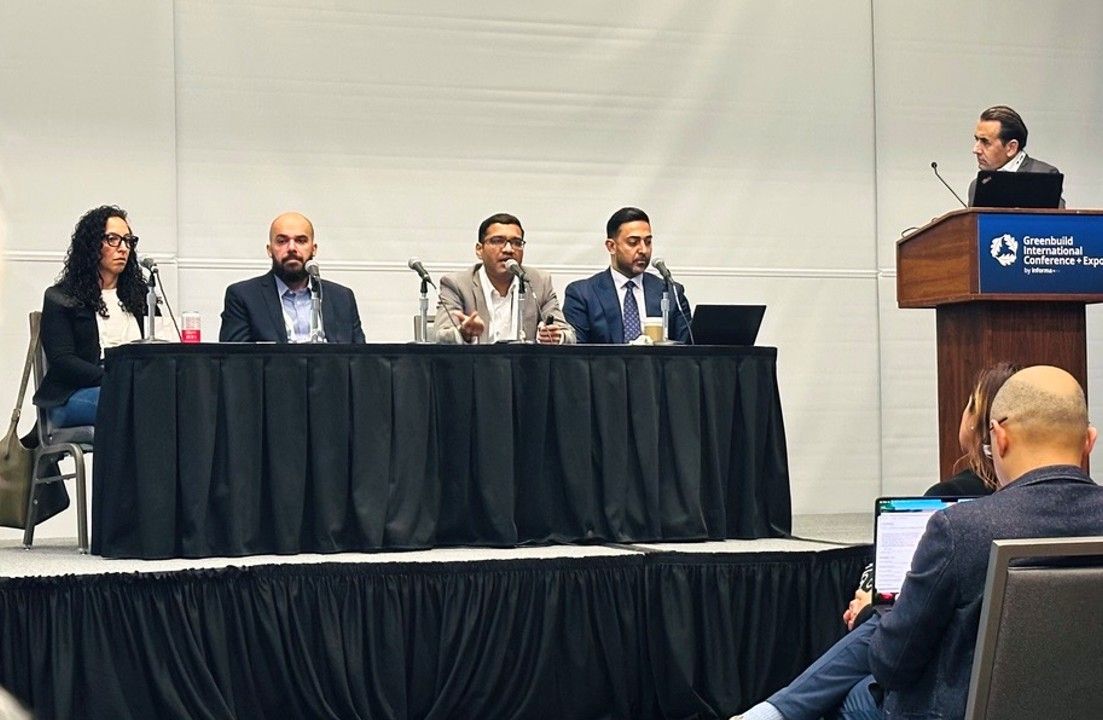
This was a central theme raised by Praveen Hassan Chandrashekar, Asia’s Regional Director (Sustainability and Environmental Design), during his engagement at Greenbuild 2026. His focus on designing for maintainability highlighted why planning for performance cannot end at practical completion. It needs to begin during design.
-
Build an electrification pathway around the asset
Electrification is central to many decarbonisation programmes, but there is no single pathway. Strategic planning and targeted investments can help align electrification initiatives with project timelines, funding cycles, infrastructure upgrades and long-term carbon reduction goals while navigating financial, operational and regulatory constraints.
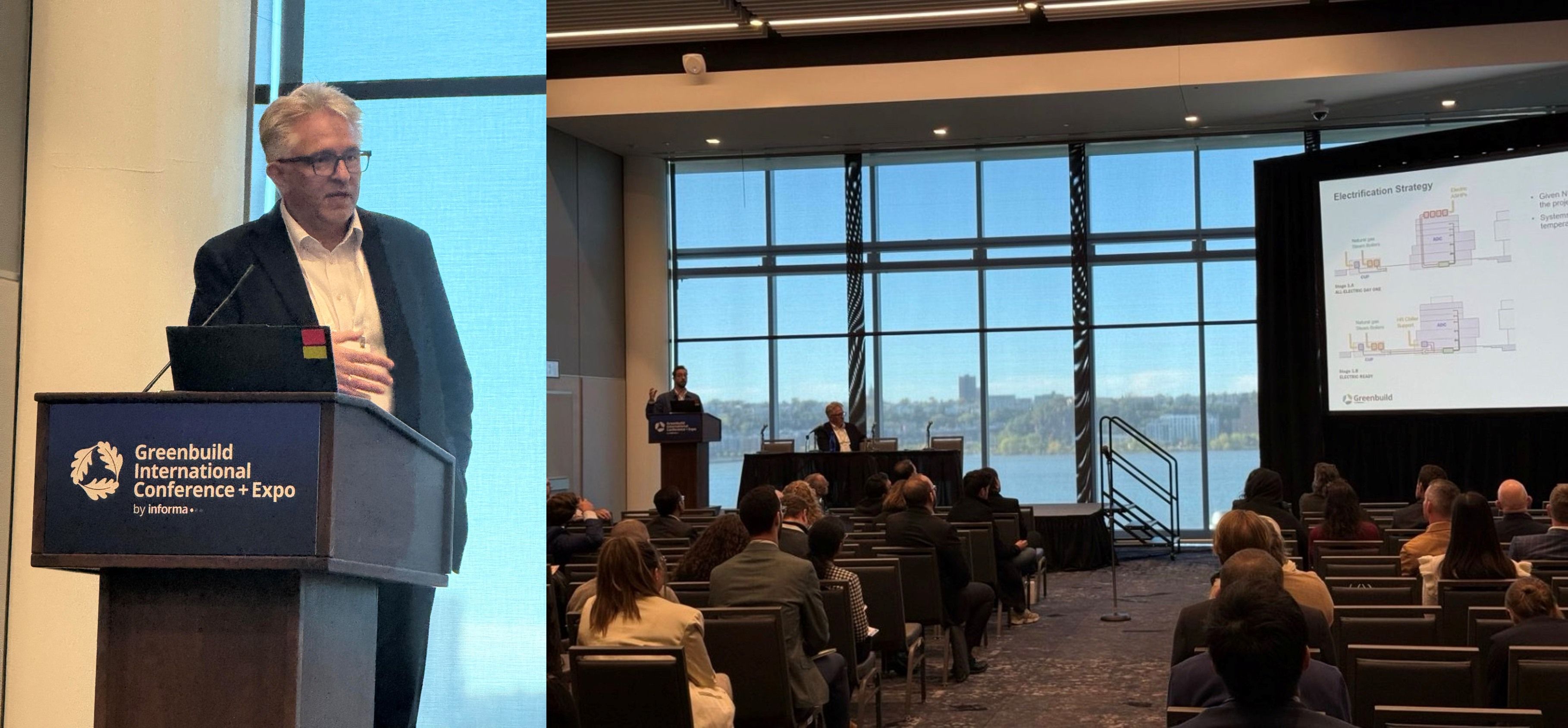
At Greenbuild 2026, Nico Kienzl, Regional Head (Americas, Europe and UK) and Senior Executive Director (Sustainability and Environmental Design) at SJ Group, and Director, Atelier Ten, an SJ company, co-presented a session drawing on projects from a single academic building to campus and district systems. It showed how the right pathway depends on the asset and its context.
The right solution today does not always mean stand-alone electrification. Efficient design requires reduction in peak demand to allow smaller systems, while alignment with district or grid decarbonisation plans can preserve future options. As technology and costs evolve, electric systems need to be considered early enough to avoid design roadblocks.
-
Use data-driven insights to drive better decisions
Data-driven insights can help teams make better planning, design and operational decisions with decisions earlier in the delivery cycle often having larger influence on positive outcomes. However, insights alone do not create better outcomes. To drive improvements, they must be connected to clearly defined questions, integrated workflows and professional expertise informed by real life experience.
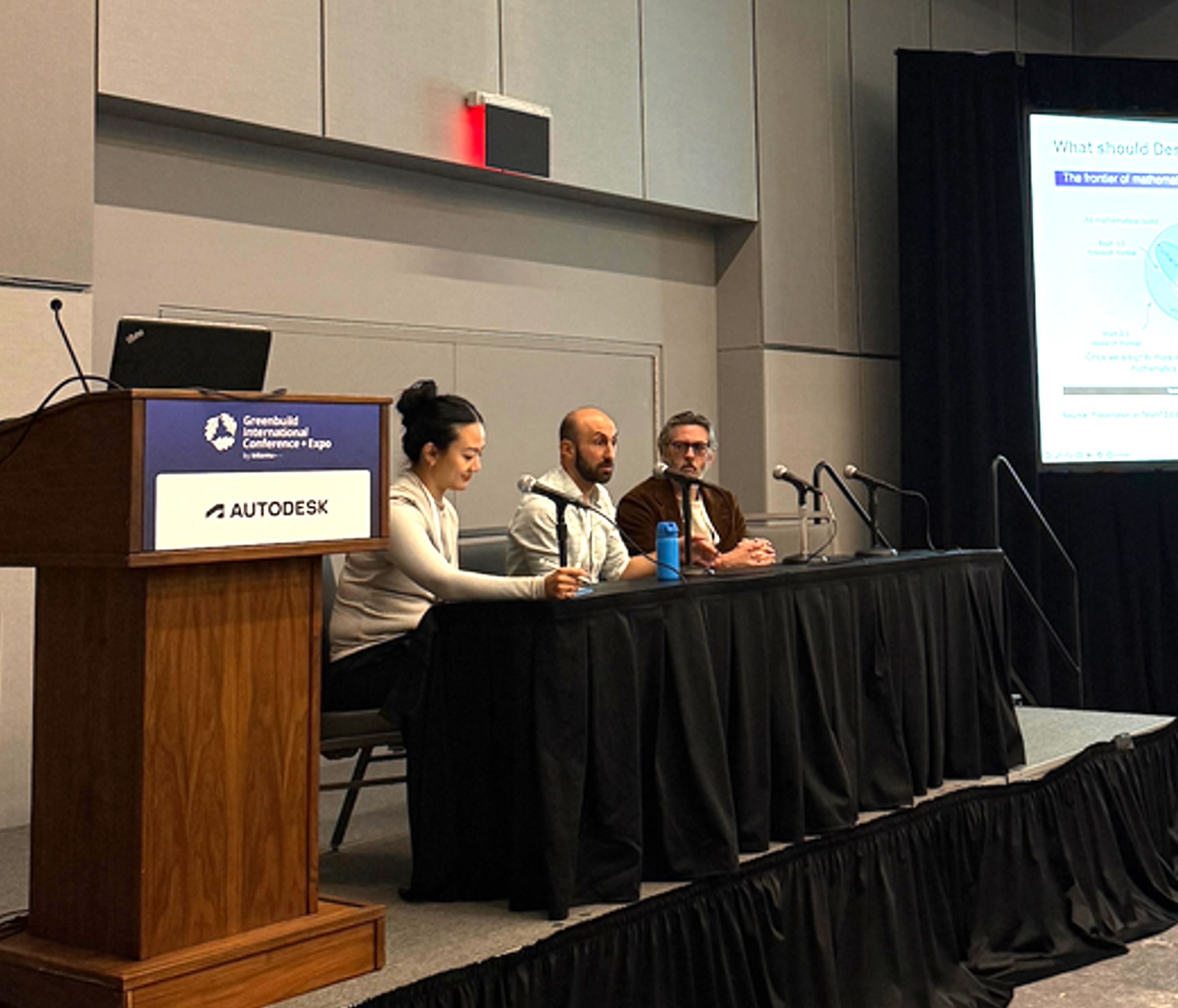
During a panel at Greenbuild 2026, Volkan Doda, Head of Design Technologies at Atelier Ten, shared his vision on how AI will increasingly create value across the built environment and how our industry could harness its potential most effectively.
The discussion examined the importance of connected data and AI-assisted insights in enhancing expert capabilities and helping teams accelerate design exploration, improve collaboration and evaluate trade-offs involving cost, carbon and performance earlier in the project lifecycle.
The session also highlighted the foundations required for successful AI adoption, including data readiness, workflow integration and workforce development.
The wider lesson is to focus on the created value in addition to the efficiency gains. This begins with clearly defining the decision that needs to be made and then determining what data, insights and expertise are needed to support it. The goal is to improve professional judgement while increasing its speed and accessibility.
It is to strengthen expertise with data and artificial intelligence so that teams can test and challenge assumptions, identify patterns and reason towards better-informed decisions that deliver well-rounded and better outcomes in support of more and increasingly complex projects.
-
Unlock more from existing assets and districts
Better-informed decisions can also reveal opportunities within assets and districts that might otherwise be overlooked. In many cases, strong environmental and financial outcomes can come from retaining, adapting, reconnecting or strategically expanding existing assets. Evaluating retention, adaptive reuse and district-scale interventions alongside conventional redevelopment can help reduce embodied carbon, extend asset life and strengthen commercial value and occupier appeal.
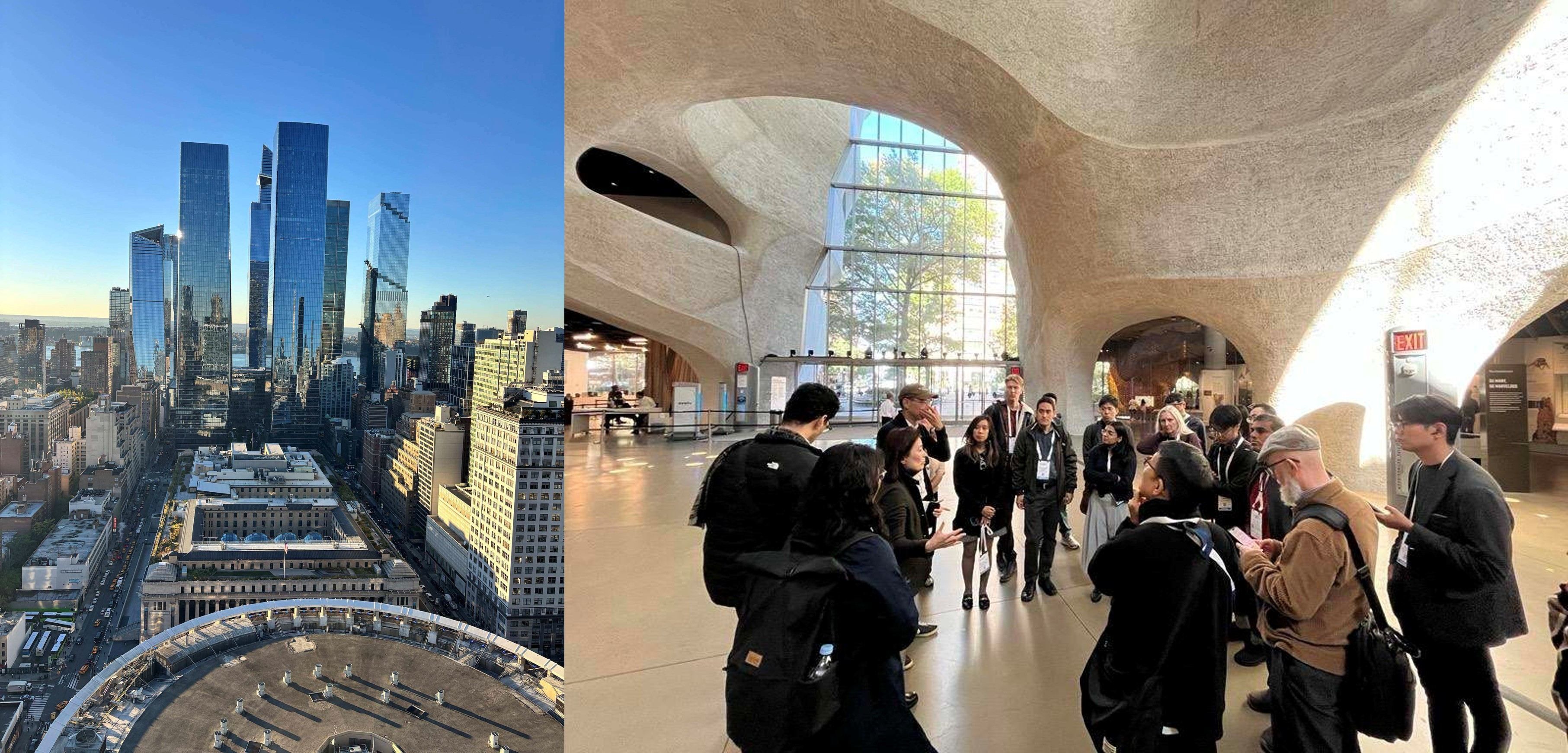
Shanta Tucker and Junko Nakagawa led tours of The PENN District and the Richard Gilder Center.
Two Greenbuild 2026 tours illustrated the broader potential of working with existing assets at different scales. Shanta Tucker, US Managing Director at Atelier Ten, led a tour of The PENN District, where existing buildings and infrastructure were reimagined to improve public transit service, build community connections, and support a more resilient district. Junko Nakagawa, New York Director at Atelier Ten, led a tour of the Richard Gilder Center addition to the American Museum of Natural History, illustrating how thoughtful expansion and upgrading of the existing infrastructure can enhance performance, visitor experience and long-term resilience of not only the new expansion but also the larger existing AMNH campus.
Enduring value often lies not in choosing between retention and redevelopment, but in understanding which combination of interventions can unlock the full potential of an existing asset or district.
-
Define enduring value before options narrow
How should owners and developers define value in a changing market? Cost, viability, rent and yield remain fundamental, but environmental performance, wellbeing, resilience and adaptability increasingly influence whether an asset remains successful over time.
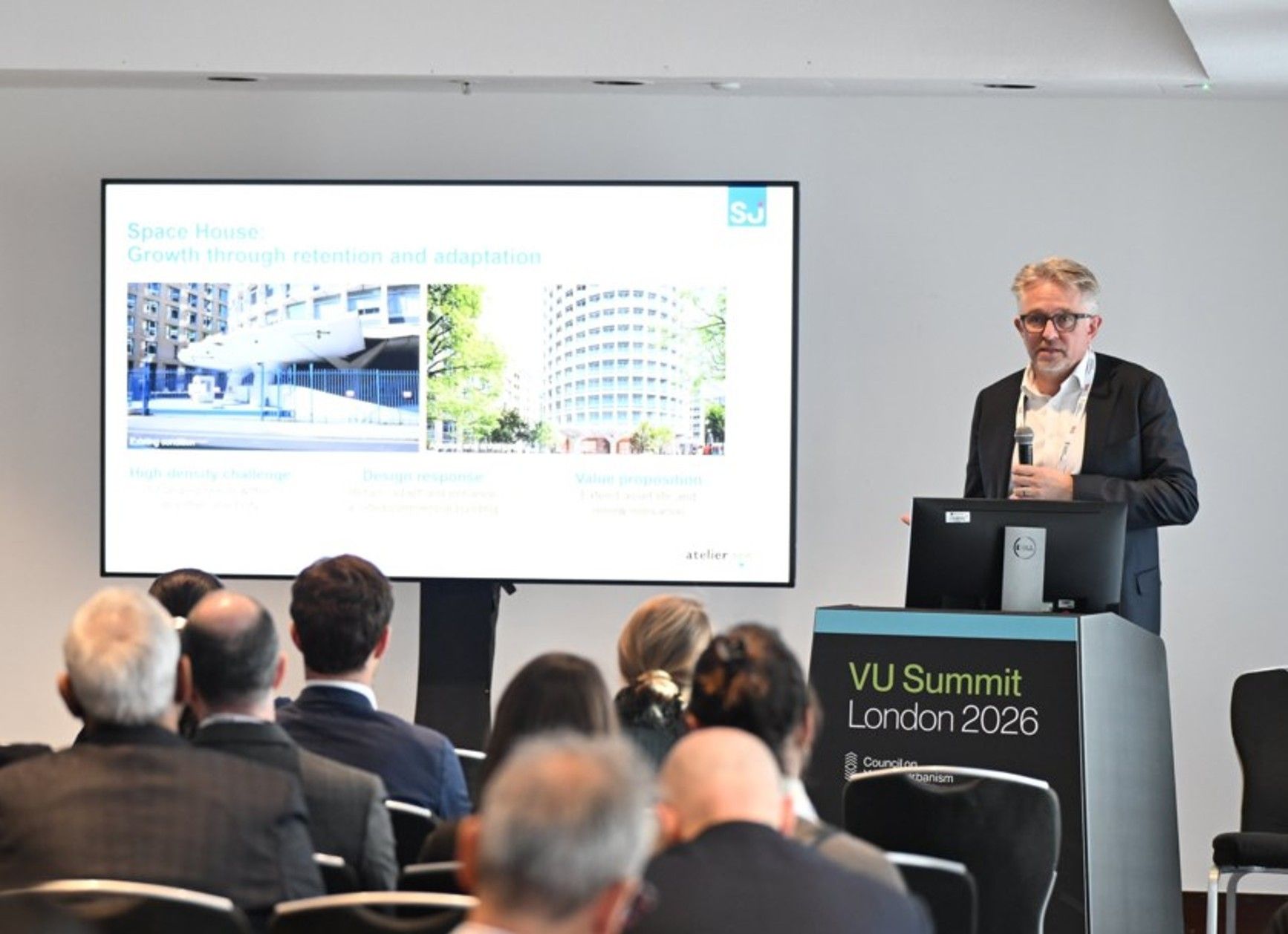
At the VU Summit 2026, Nico explored this in his presentation, From Environmental Ambition to Enduring Value: Creating Better Outcomes in High-Density Environments. He stressed acting early, while teams can still influence form, façades, systems, materials and public realm, and considering the building’s contribution to connectivity, urban greening and user experience.

Space House in London shows how this works in practice. Its renewal combines architectural conservation with environmental performance and workplace adaptability, helping reposition the asset for a new generation of occupiers.
The commercial lesson is that environmental considerations are more likely to protect and unlock value when embedded before investment and design decisions narrow the available options.
-
Create broader value through regenerative design
If the definition of value is expanding, projects should perhaps be measured not only by the harm they reduce, but also by what they contribute.
This question was central to Jamie Miller’s engagement at the Biophilia Summit. As SJ Group’s Director of Regenerative Design, he introduced the Living Story, a place-based approach that asks what the land wants to do, what it will support and what it will permit.
Bringing ecological analysis, nature-based solutions, biomimicry and indigenous knowledge into early design decisions can highlight constraints, reveal opportunities a conventional brief may miss and inform projects that contribute to their place rather than simply occupy it.
Jamie Miller also introduced SJ Group’s Regenerative Cities Tool, which enables communities, cities and regions to understand where they are already regenerative and where they could improve.
The question is no longer only how buildings can do less harm, but what they can contribute to people, communities and living systems. Understanding place before fixing the design response can help manage risk and establish stronger environmental, social and commercial outcomes.
From ambition to implementation
Across SJ Group, our multidisciplinary expertise connects climate advisory, sustainability and environmental design, regenerative design, planning, architecture, engineering, technology and delivery. This enables us to help clients translate climate objectives into practical pathways that improve performance, manage risk, unlock site and asset potential and create enduring value.
Talk to our team about translating your climate objectives into an implementable asset, development or city strategy: