Catalysing Action – How the Middle East can turn climate ambition into investable, resilient assets
With COP31 in full swing, financing, implementation and climate-resilient cities and buildings are high on the global agenda. These priorities align with what we are seeing across the Middle East, where national net-zero ambitions and continued investment in cities, infrastructure and real estate are sharpening the focus on resilient, efficient and high-performing assets.
How can capital be directed towards solutions ready to scale? When should an existing asset be retained or adapted? And how can climate strategy improve performance while supporting the comfort, health and daily experience of the people who use these places?
Recent Middle East engagements involving SJ leaders- Farah Naz, Dr Waleed Yagoub, Asban John Pious, Sandra Draskovic and Musharib Mohammad Khan offer a practical lens on three priorities.
-
Turn climate ambition into an investment strategy
The Middle East’s continued development creates an opportunity to embed climate action into decisions being made today. As the UAE works towards net zero by 2050 and Saudi Arabia pursues its 2060 ambition through the Circular Carbon Economy approach, climate objectives increasingly need credible commercial models, delivery pathways and measurable outcomes.
This connection between ambition, investment and delivery was central to the recent regional engagements of Farah Naz, Global Climate Advisory Director.
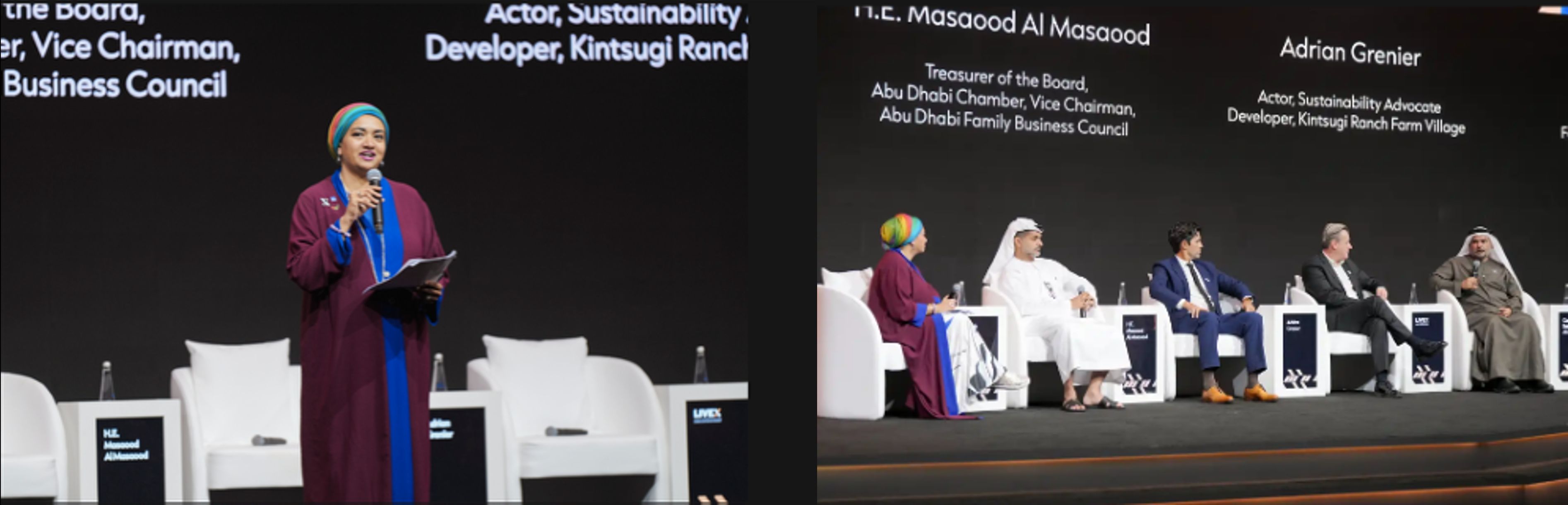
At LIVEX 2026, she moderated a discussion on how climate ambition can become investment and action at scale, including what it will take to mobilise capital, scale environmental solutions and deliver resilient, liveable cities.
At the CIBSE MENA Decarbonisation Conference, she developed the argument further by positioning decarbonisation as a strategic decision linking investment, planning, design and operational performance.
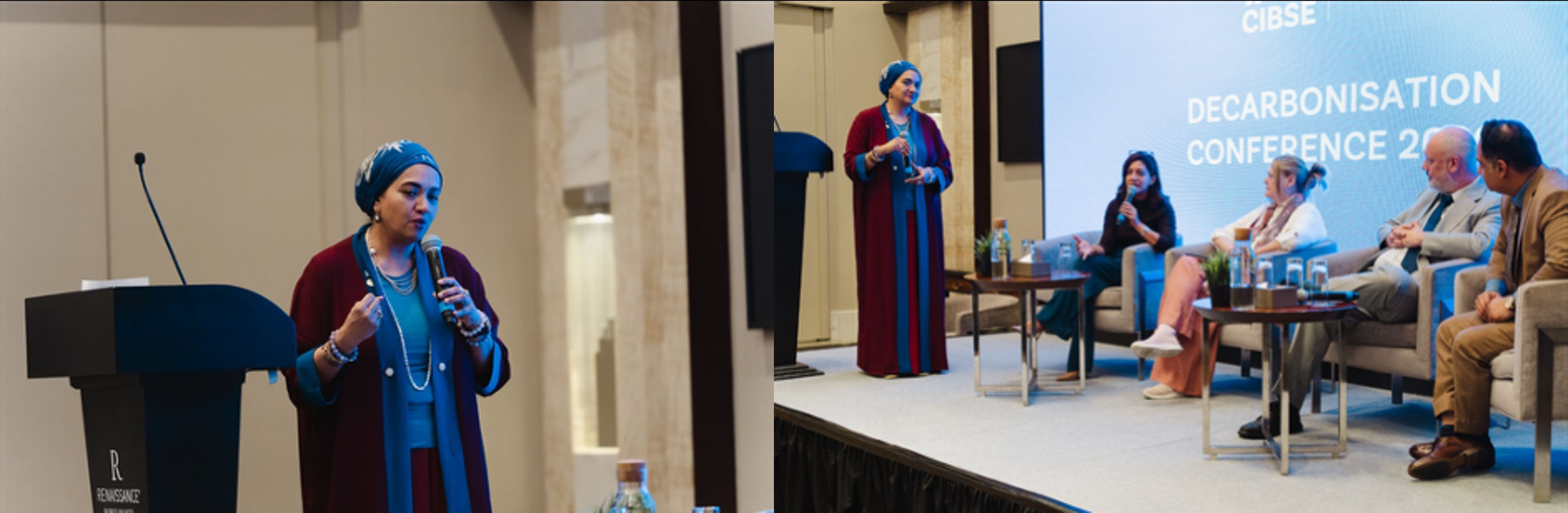
Investment, planning, design and operations do not happen in isolation. This is where Climate Advisory matters. Bringing climate risks and opportunities into strategic decisions early helps organisations identify where to act, prioritise investment and develop measurable pathways to delivery.
Making those choices also requires better climate intelligence. At WETEX 2026, Dr Waleed Yagoub, Associate Director (Sustainability), explored how integrated planning, data and digital innovation could help cities prepare for conditions benchmarked at 50°C across buildings, energy, infrastructure and public spaces.
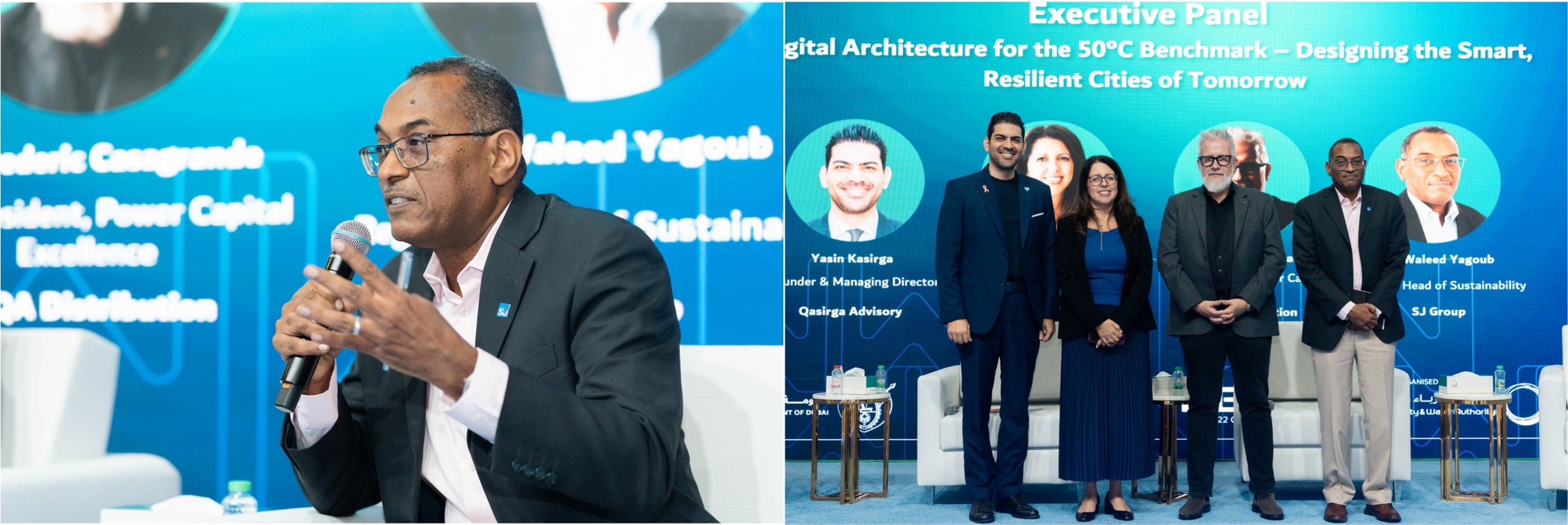
The starting point is not which technology to deploy. It is the investment, planning or operational decision that needs to improve.
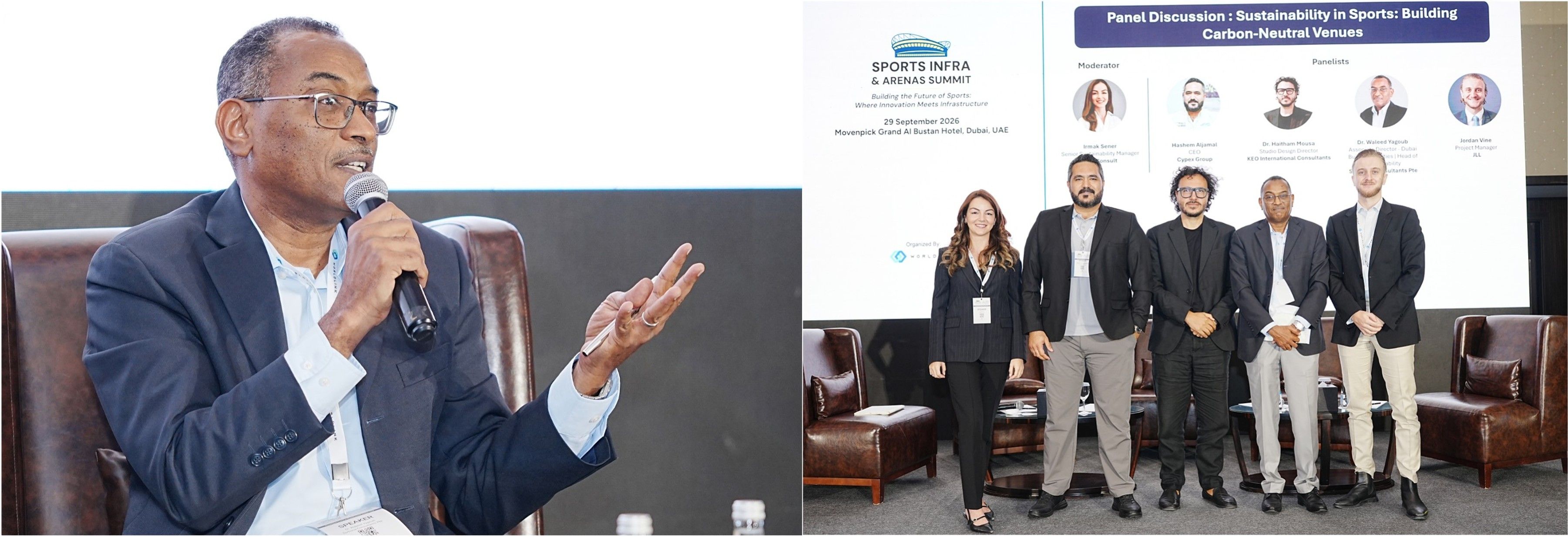
That principle applies across asset types, including complex facilities such as sports venues, where Waleed contributed to discussions at the Sports Infra & Arenas Summit on pathways towards carbon-neutral and net-zero performance.
-
Unlock whole-life value from assets and materials
New development will remain important across the Middle East, but replacement should not be automatic. Existing assets may offer opportunities to avoid embodied carbon, extend useful life, improve operations and reposition properties for changing market and occupier needs.
At the EmiratesGBC Annual Congress 2026, Asban John Pious, Senior Environmental Manager, advocated a retrofit-first approach: improve what is already on site, reuse materials where possible and build only what remains.
Three questions provide a practical starting point:
- What is already standing, and what could it become?
- If nothing is standing, what can be reused from elsewhere?
- How will we know it is working one year after handover?
These questions move the decision beyond initial capital cost. Retention, adaptation, repositioning and redevelopment should be assessed against embodied carbon, programme, operational performance, market relevance and occupier experience.
Where new construction is required, the challenge shifts to materials. The Middle East cannot simply adopt decarbonisation pathways developed for other markets. Solutions need to reflect regional building typologies, approval processes, material supply chains, safety requirements and the scale of development.
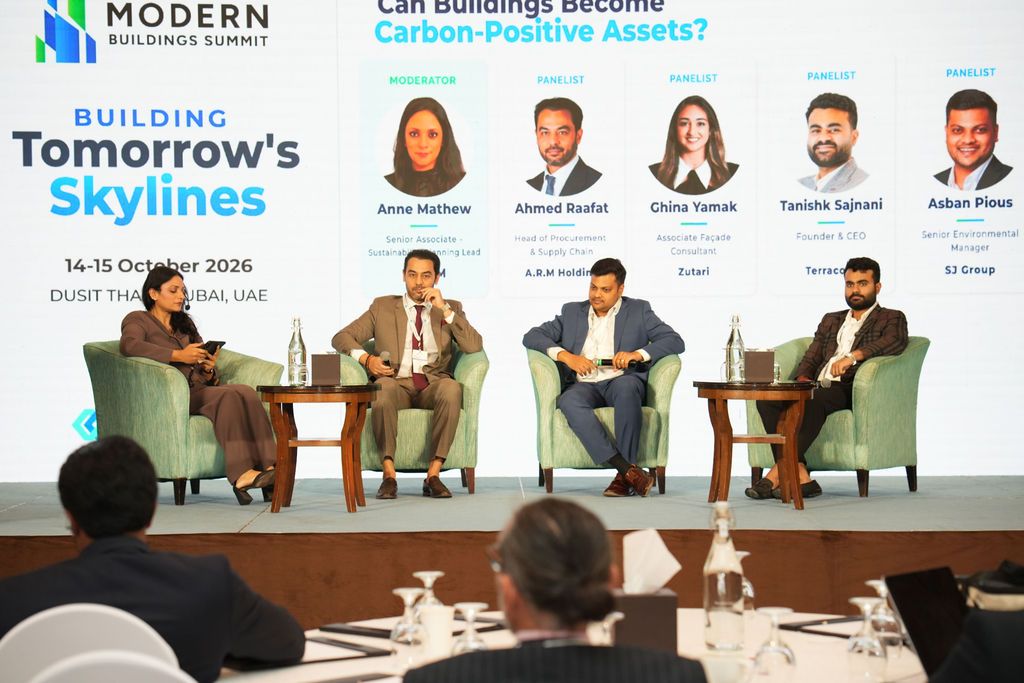
At the Modern Buildings Summit Dubai 2026, Asban argued that the destination may be shared, but each region needs its own route towards lower-carbon development.
Responsibly sourced bio-based materials and carbon-mineralised concrete may help reduce upfront emissions, but adoption depends on credible carbon evidence and confidence in safety, performance and durability.
Asban also proposed embedding structured, validated carbon budgets into building approvals, aligned with national net-zero pathways. These could translate national ambition into measurable project requirements, with progressively tighter limits and verification of what is ultimately built.
This focus on practical adoption was also central to Sandra Draskovic’s role as a judge for the Sustainable Building Material of the Year: Construction Material category at the MENA Green Building Awards 2026. As a Principal Engineer – Environmental, Sandra sees material innovation as one of the built environment’s most powerful decarbonisation levers, particularly where solutions can reduce embodied carbon across projects and portfolios.
For these solutions to create meaningful industry impact, technical performance must connect with funding, manufacturing capacity, procurement and logistics. The opportunity is not simply to identify better materials, but to establish the commercial and delivery conditions that allow credible lower-carbon alternatives to become standard practice.
-
Engineer climate ambition into operational performance
Assets in the Middle East must perform under demanding conditions. Cooling demand, water use, public health, fire protection, maintainability and system reliability directly affect operating costs, resilience, user comfort and long-term value.
That makes engineering delivery the ultimate test of climate ambition. Asset strategies, retrofit plans and lower-carbon materials create value only when they become coordinated, buildable and operationally reliable solutions.
The honorary mention received by Musharib Mohammad Khan, Senior Public Health Engineer, at the CIBSE MENA Awards 2026 for his contribution to public-health and fire-protection engineering reflects the technical discipline behind dependable building performance. It also reflects the wider role of SJ Group’s MEP team in identifying coordination and delivery risks before they reach site.
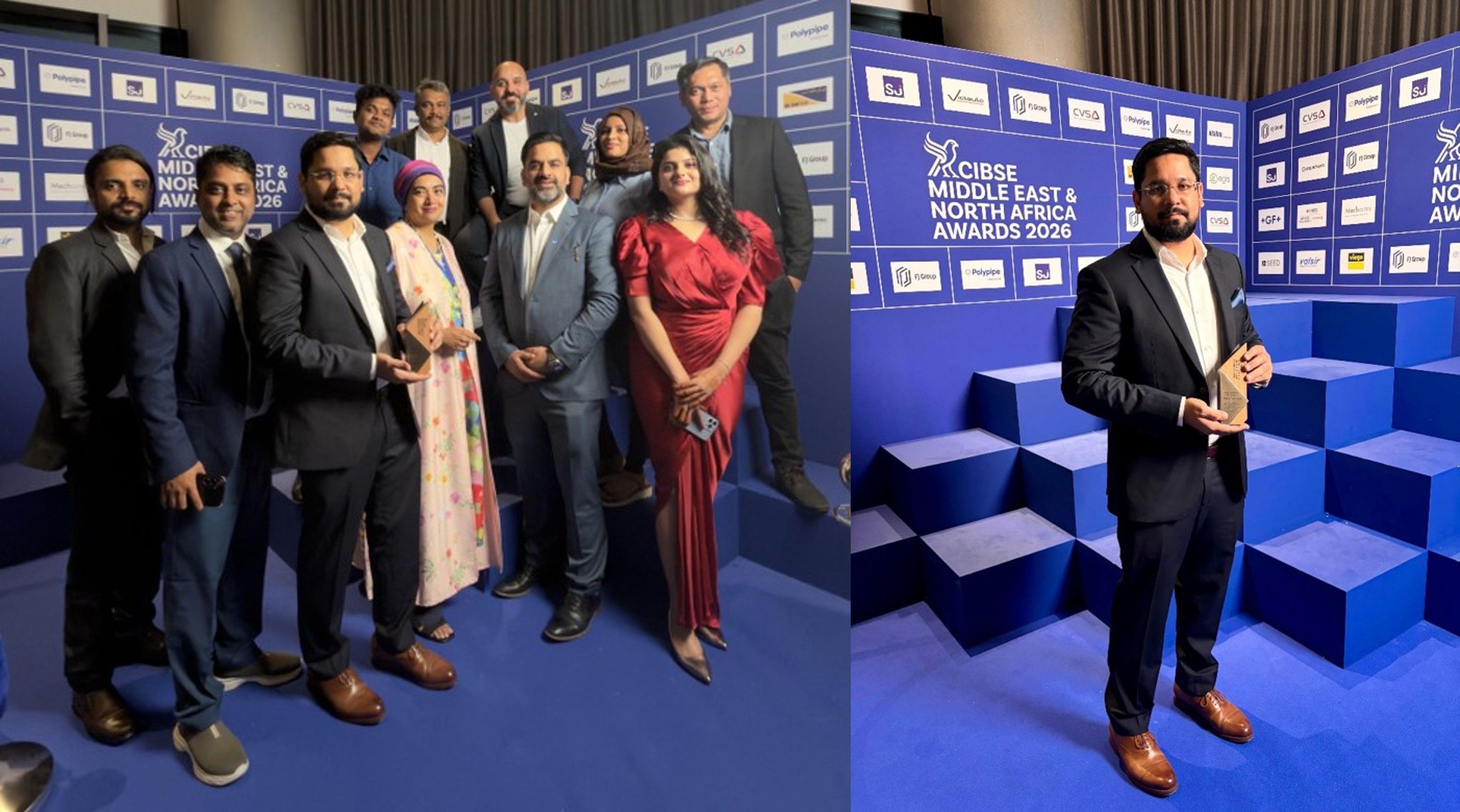
Building services work is often largely unnoticed when it performs well, but it quietly ensures safe water, effective sanitation, fire protection and the reliable operation of buildings that people use every day.
Engineering excellence is how climate ambition survives design, procurement, construction, commissioning and operation. Bringing engineering expertise into the process early allows teams to address systems integration, buildability, maintainability and lifecycle performance before changes become more difficult and costly.
From climate ambition to delivered value
The Middle East’s opportunity is to embed climate action into the decisions that already shape value: where capital is directed, which assets are retained, what materials are specified and how systems perform over time.
Across SJ Group, our multidisciplinary expertise connects climate advisory, sustainability and environmental design, planning, architecture, engineering, technology and delivery. This enables us to help governments, developers, investors and asset owners assess options early, strengthen business cases, manage delivery risk and carry climate objectives through design, implementation and operation.
The result should be assets and infrastructure that perform in the region’s climate, retain value over time and support the health, comfort and daily lives of the people who depend on them.
Connect with our Middle East leaders
Talk to our team about translating climate objectives into an investable and implementable asset, development or city strategy:
- Farah Naz, Global Climate Advisory Director, SJ Group
- Dr. Waleed Yagoub, Associate Director, Sustainability, SJ Group
- Baskaran Ramanantham, Regional Director – MEP Building Services, SJ Group
- Hassan Taleb, AMECA Region Head, SJ Group