
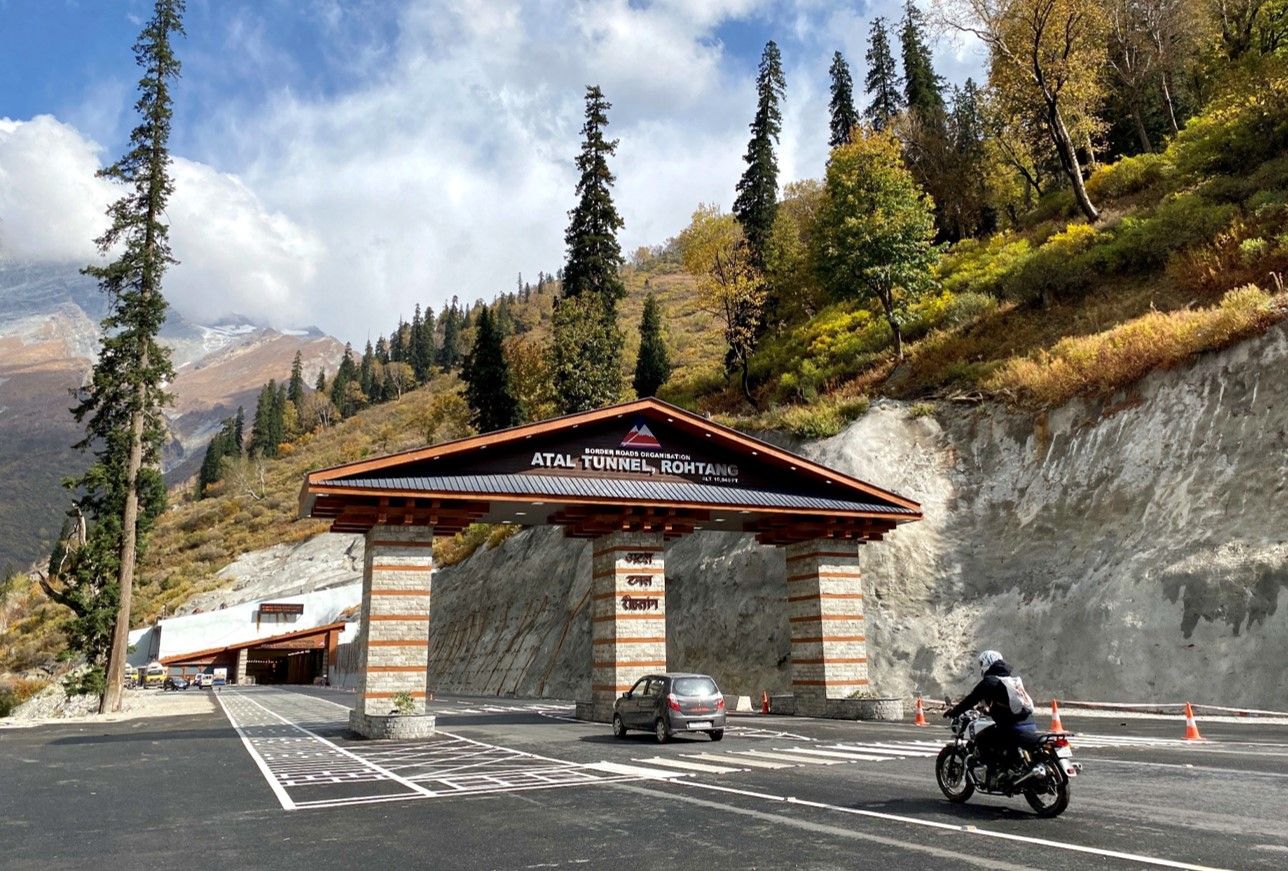
Enabling Year-Round Connectivity Through the Himalayas
A landmark transport infrastructure project providing all-weather connectivity through the Rohtang Pass in the Himalayas. The 9 km Atal Tunnel improves access between Manali and the Lahaul and Spiti Valleys, reducing travel time, enhancing mobility and supporting economic opportunities for previously isolated communities.
-
Location
Rohtang Pass, Himachal Pradesh, India
-
Period
2006-2020
-
Site Area
9km highway tunnel
-
46km
Travel distance reduced
-
Up to 4h
Travel time cut
-
20,000
Residents served
Connecting Communities Through the Himalayas
The Atal Tunnel was developed to provide safe, reliable and year-round connectivity through the Rohtang Pass, a critical route in the Himalayas that was historically inaccessible for much of the year due to heavy snowfall, avalanches and landslides. Stretching 9 km beneath the Pir Panjal Range, the tunnel creates an all-weather transport link between Manali and the Lahaul and Spiti Valleys, significantly improving regional accessibility and mobility.
SMEC provided design, engineering and advisory services for the project, later undertaking the role of Independent Engineer for the tunnel’s electrical and mechanical systems. The project required innovative solutions to address complex geological conditions, extreme altitude and challenging climatic variations between the tunnel portals. Advanced ventilation, fire and life safety systems, emergency egress infrastructure and resilient tunnel support measures were integrated to ensure safe and reliable operations.
The outcome is a transformative piece of infrastructure that reduces travel distance by 46 km and travel time by up to four hours, while enabling year-round access for communities previously isolated during winter months. By improving connectivity, supporting tourism and facilitating the movement of people and goods, the Atal Tunnel has strengthened economic opportunities and enhanced quality of life across the region.
The outcome
Year-round connectivity through the Rohtang Pass, improving access, mobility and economic opportunities for communities in the Lahaul and Spiti Valleys while establishing a new benchmark for high-altitude tunnel infrastructure.
Up next

