Skip to main content Skip to main navigation
Subana Jurong Logo

Let’s connect you

Please complete your details below and one of our team members will be in touch.

Name(Required)

Designing Climate-Smart Cities: Nature-Based Solutions Circularity and Innovation

by Nadia Ibrahim, Regional Lead – Regenerative Climate & Circularity, SJ Group

Published December 29, 2025

Urbanisation is one of the defining forces shaping the 21st century. By 2050, nearly 70 per cent of the global population will live in cities, placing unprecedented pressure on land, resources, infrastructure systems and ecosystems. While cities have historically driven economic growth and social progress, they have also contributed significantly to environmental degradation, biodiversity loss and rising climate risk.

The central question is therefore not whether cities will be impacted by climate stressors, but whether they are being designed to withstand, adapt and thrive under increasingly volatile environmental conditions. Globally, the limitations of conventional urban planning—often characterised by siloed systems, resource-intensive design and short-term optimisation—are becoming increasingly evident.

In regions undergoing rapid urban expansion under extreme climatic conditions, these challenges are further amplified. In the Middle East, high temperatures, water scarcity, energy intensity and large-scale development converge, making climate-smart urbanism not simply a sustainability aspiration, but a strategic necessity. Cities must now be conceived as integrated, adaptive systems—capable of remaining resilient, liveable, circular and inclusive over the long term.

Against this backdrop, Nadia Ibrahim, Regional Lead – Regenerative Climate & Circularity at SJ Group, examines how climate-smart cities can be shaped through systems thinking, regenerative design, circular economy principles and innovation—moving beyond risk mitigation toward long-term urban value creation.

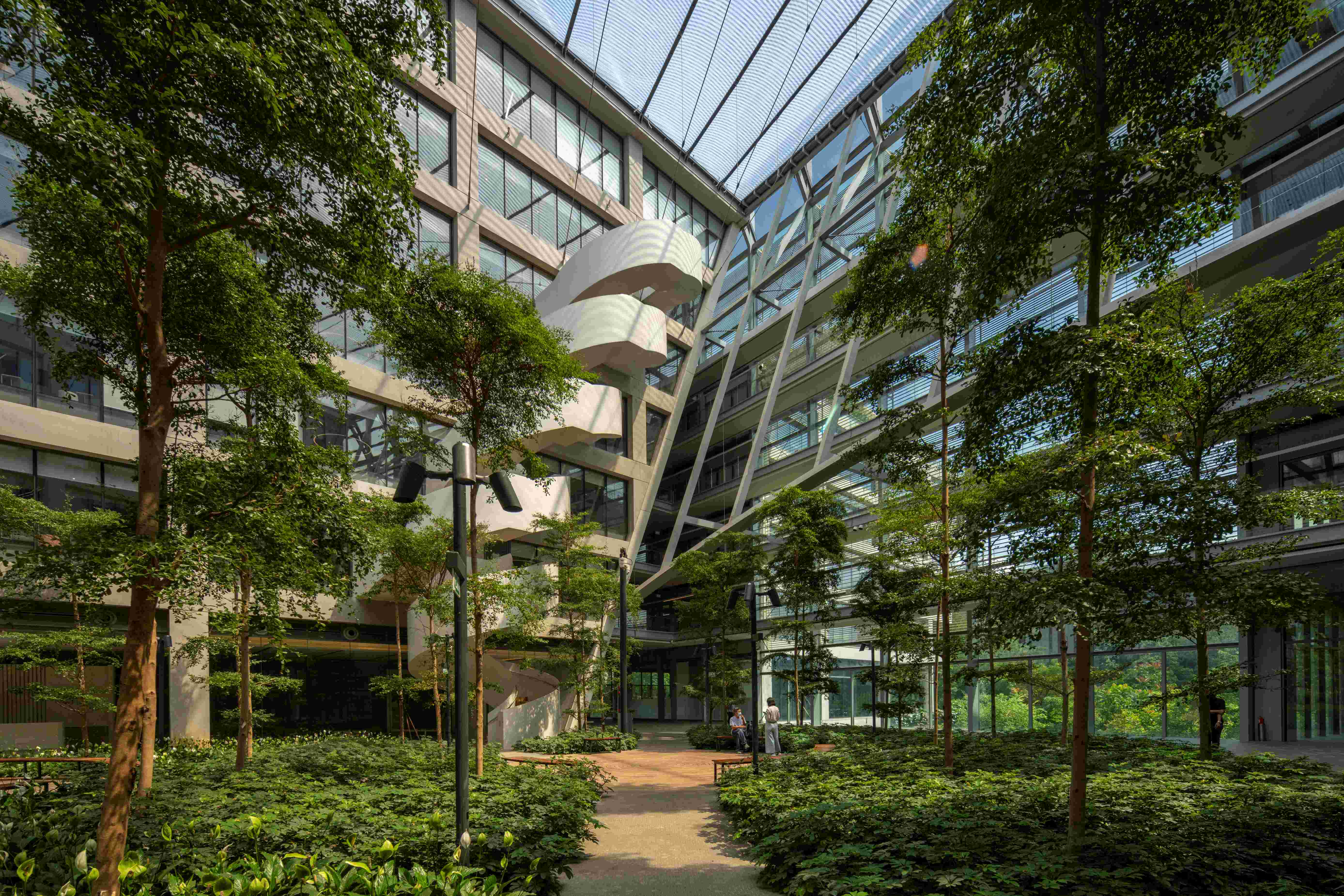
SJ's headquarters, SJ Campus, is a living demonstration of how climate-smart cities can be designed as integrated systems. The Super Low Energy headquarters works with its natural topography — elevating built forms to preserve biodiversity, enhance greenery and enable passive cooling. From underfloor air distribution and high-performance glazing to solar photovoltaics and nature-integrated design, the campus brings together regenerative and climate-responsive strategies to optimise energy efficiency, well-being and long-term urban resilience.

Systems Thinking as the Foundation

Cities function as interconnected systems rather than collections of individual assets. Climate stressors expose these interdependencies with increasing frequency. Extreme heat drives up cooling demand, strains energy networks, affects public health and reduces outdoor liveability. Water scarcity influences landscaping, construction practices, food systems and long-term urban growth. Flash flooding disrupts transport, utilities and economic activity—often simultaneously.

Systems thinking responds to this complexity by shifting urban planning away from isolated interventions toward integrated, cross-sector decision-making. It recognises that resilience emerges from how buildings, infrastructure, energy, water, mobility and natural systems interact.

A regionally relevant example is the integration of urban form, cooling infrastructure and energy systems. In hot-climate cities, cooling demand dominates energy consumption. When compact urban design, passive shading, high-performance buildings, district cooling, renewable energy and thermal storage are planned together, cities can significantly reduce peak electricity demand while improving thermal comfort and energy security. This systems-based approach delivers resilience and efficiency that cannot be achieved through standalone solutions.

However, integration alone is insufficient. Climate-smart cities must also address the deeper challenge of ecological degradation and resource dependency.

From Sustainability to Regenerative Design

Global recognition of biodiversity loss has underscored the limitations of conventional “do less harm” sustainability approaches. Urban development has long been shaped by the assumption that cities exist outside nature—engineered environments designed to control or exclude natural processes. In extreme climates, this has resulted in rigid, resource-intensive systems that require constant energy input to maintain stability.

Regenerative design represents a fundamental shift in this paradigm. Rather than resisting natural systems, regenerative design works with them—allowing ecological processes to inform how cities are planned, built and operated.

In practice, regenerative design begins with understanding the land: its hydrology, topography, climate patterns and ecological networks. Using tools such as GIS analysis, climate modelling and site-specific environmental assessment, development can be aligned with natural flows rather than imposed against them. Landscapes become functional infrastructure, managing water, reducing heat and supporting biodiversity. Buildings respond to climate through orientation, shading and passive design, reducing reliance on mechanical systems.

From experience working with real estate developers, construction companies and large infrastructure clients, it is increasingly evident that regenerative design strengthens long-term asset performance, operational resilience and economic value—particularly in climate-exposed regions.

Circular Economy and Urban Resilience

Regenerative design is reinforced by circular economy principles, which reframe waste, water and materials as continuous resource flows.

For cities and mega-developments, circularity must be addressed at scale. This includes designing buildings for adaptability and disassembly, minimising construction and demolition waste, reusing materials, integrating decentralised water reuse systems and embedding renewable energy at district level. In water-stressed regions, circular water systems are especially critical, reducing dependency on energy-intensive supply solutions while improving resilience.

When embedded early in master planning and design, circular economy strategies reduce lifecycle costs, mitigate supply-chain risks and future-proof urban assets against regulatory and climate uncertainty.

Mobility, Digitalisation and Liveability

Mobility systems strongly influence emissions, land use and quality of life. Climate-smart cities require a shift from car-dependent urban forms toward integrated, low-carbon mobility networks. Public transport, transit-oriented development, walkable neighbourhoods and shaded public realms reduce emissions while enhancing accessibility and social inclusion.

Digitalisation acts as a critical enabler across these systems. Climate risk modelling, digital twins and urban analytics allow cities to assess vulnerabilities, test future scenarios and optimise performance over time. When embedded within governance frameworks, digital tools support adaptive management, transparency and coordination across complex urban programmes.

A Strategic Imperative

Climate-smart cities are not defined by individual technologies or iconic developments. They are defined by how effectively urban systems are integrated, adaptive and regenerative over time.

For the Middle East—where rapid urbanisation intersects with extreme climatic conditions—embedding systems thinking, regenerative design, circular economy principles, sustainable mobility and digital innovation into urban development is no longer optional. It is fundamental to long-term resilience, liveability and economic competitiveness.

The cities that succeed will be those designed not merely to endure climate stress, but to evolve with it—creating urban environments that support both people and the ecosystems on which they depend.