How integrated planning can shape the long-term success of Brisbane 2032
As Brisbane prepares to host the 2032 Olympic and Paralympic Games, attention is increasingly turning from event delivery to long-term legacy. At the heart of those plans is Victoria Park, which is set to become one of the city’s most significant Games precincts.
The release of the Victoria Park Precinct Draft Legacy Plan offers the clearest picture yet of how the new Brisbane Stadium, National Aquatic Centre, Brisbane Showgrounds upgrades, future Athletes Village and surrounding parklands could come together as a connected destination. Around two-thirds of Victoria Park is intended to remain green and public space, supported by new walking, cycling and public transport connections designed to integrate the precinct into everyday city life.
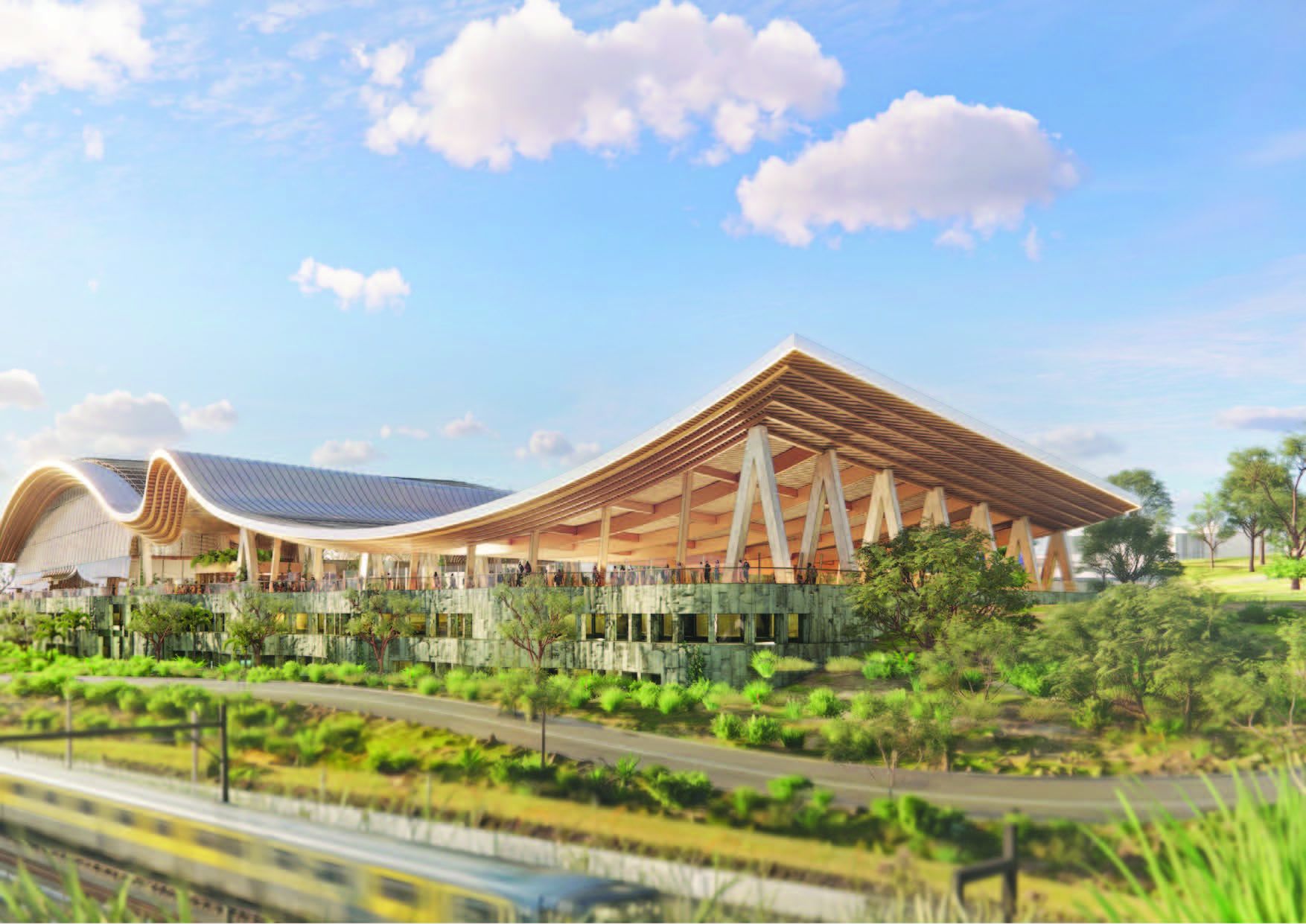
Artist Impression - National Aquatic Centre - Victoria-park-precinct-draft-legacy-plan where Robert Bird Group is providing Structural Engineering.
Building on Brisbane’s strengths
Suncorp Stadium demonstrates how a major venue can work hand in glove with the surrounding streets and night-time economy. Its relationship with Caxton Street and the inner-city transport network provides a useful example of venue, movement and place working together.
The Victoria Park Draft Legacy Plan builds on similar principles, with stronger walking, cycling and public transport connections intended to link the precinct with the city, Kelvin Grove and Fortitude Valley. This provides a strong foundation for thinking about venues, landscape, movement and everyday city life as part of one connected precinct.
Through Atelier Ten, SJ Group recently helped develop the Sustainability Strategy and Climate Adaptation and Resilience Plan for the Sydney Olympic Park Master Plan 2050, translating long-term sustainability ambitions into measurable targets, development controls and implementation pathways.
Together, these examples reinforce a broader point for Brisbane 2032. Long-term legacy is strengthened when transport, place, infrastructure and environmental performance are considered together from the outset.
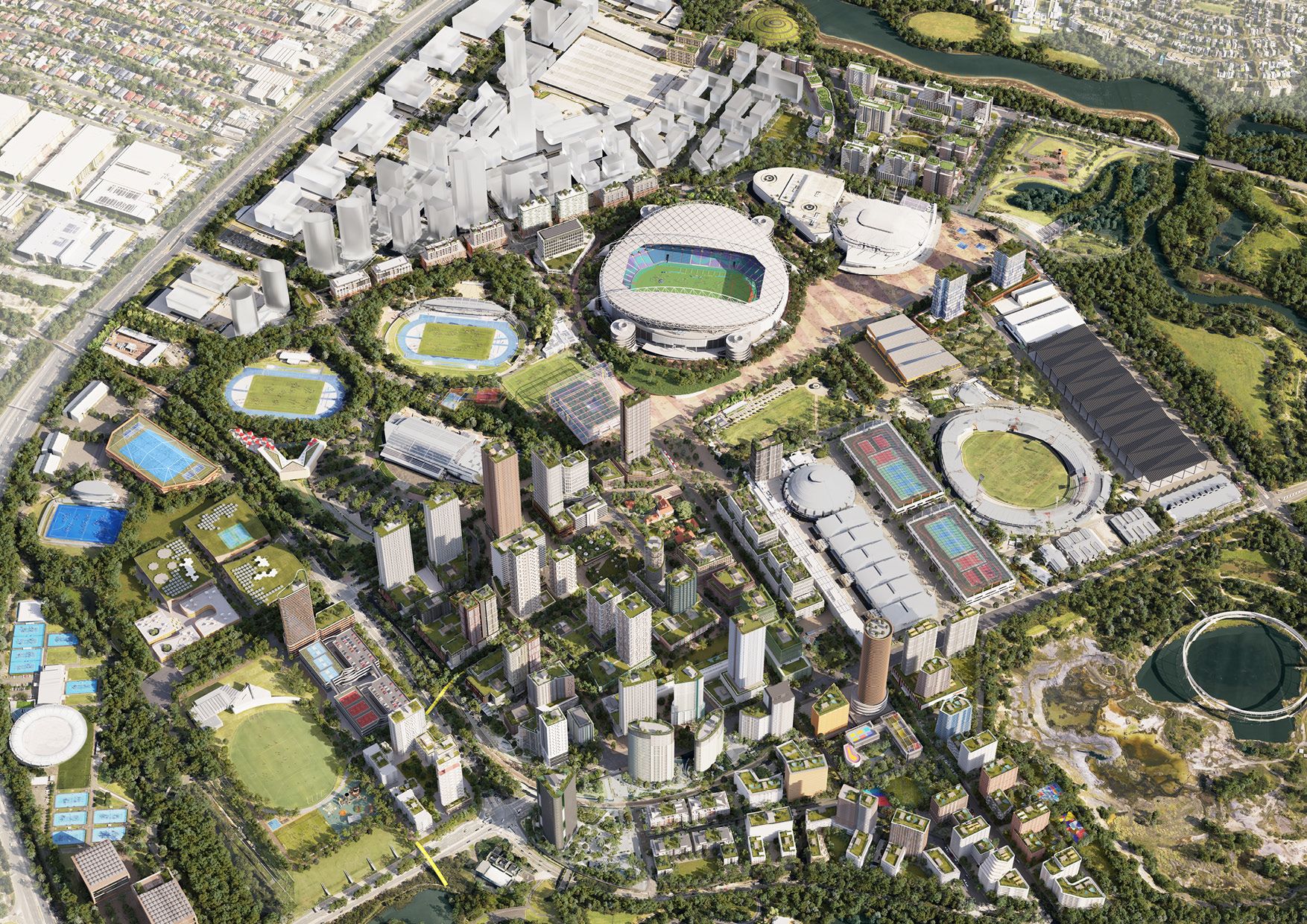
Artist Impression – Sydney Olympic Park masterplan by SJB with Environmental Design by Atelier Ten
Where the opportunity lies
The opportunity is to build on these existing strengths rather than treating Games infrastructure as a collection of isolated projects. Victoria Park can demonstrate how a major sports and entertainment precinct works seven days a week. The draft plan looks beyond individual venues, bringing together wetlands, forest areas, ridgelines, community gateways and public spaces around the venues as part of a wider landscape and movement system.
The next challenge is to carry that precinct thinking through the huge volume of development currently underway. That means planning for cooling, flood outcomes and essential services continuity as standard inputs, not hard add-ons. It also means treating waste and materials as a system and keeping heavy vehicle movements out of the main public realm where possible. Underground waste collection and dedicated organics systems are becoming more viable through technologies such as pneumatic waste networks and precinct-scale processing of food and green waste, helping reduce truck movements and improve material recovery.
And the opportunity extends beyond Victoria Park. Woolloongabba is now itself a major post-Games legacy project, with the planned redevelopment of the Gabba site creating a new entertainment, housing and mixed-use precinct around major public transport infrastructure. Brisbane 2032 legacy will be measured across the city, not at a single venue.
Precinct scale sustainability
The draft legacy plan establishes a strong public-realm vision. Six practical moves can help carry that intent from plan into delivery.
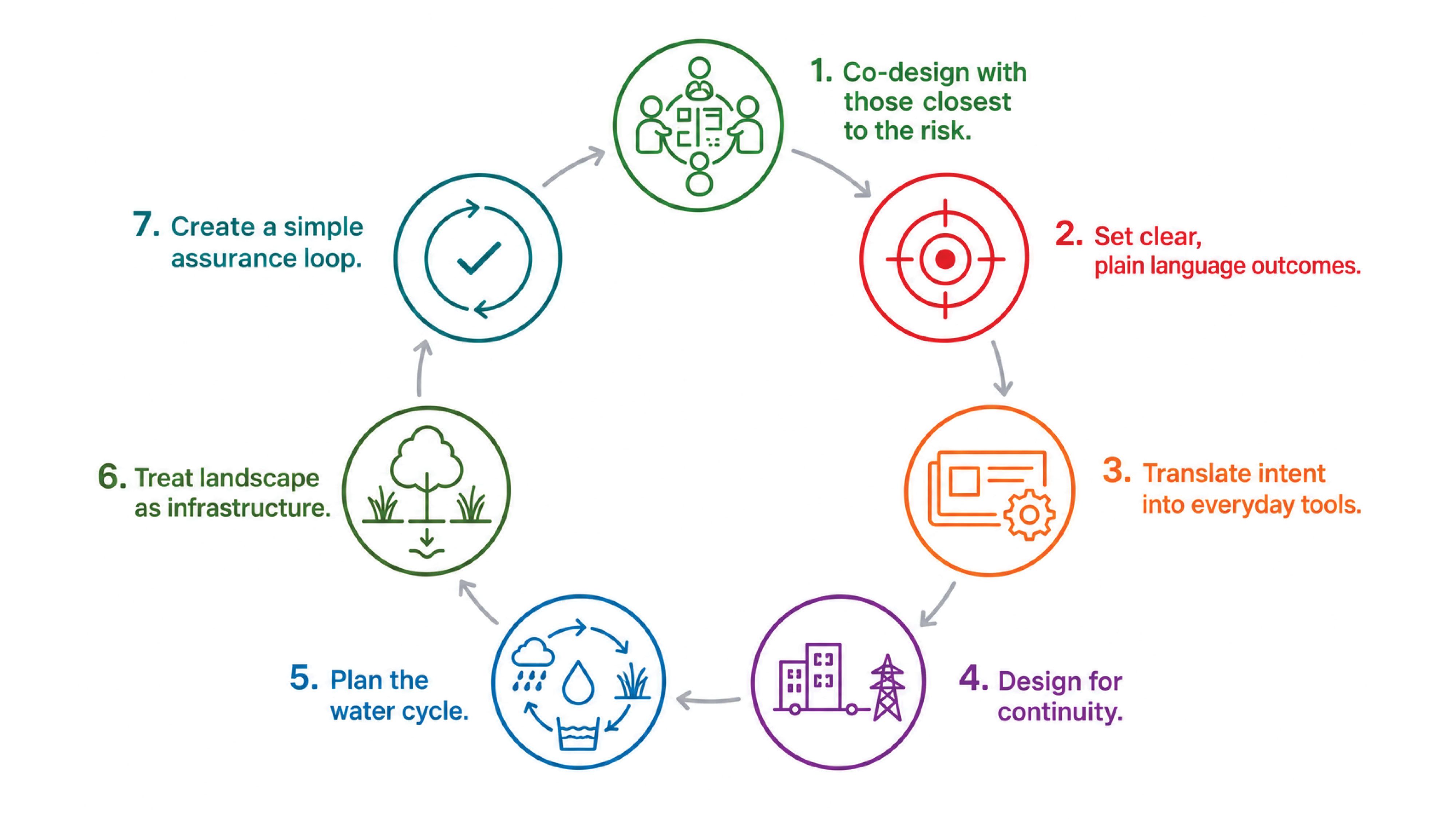
- Co-design with the people who carry the risk. Bring councils, operators, local business and communities into early decisions about movement, energy, water and materials so the trade-offs are understood and shared. The current Victoria Park consultation is an important part of that process.
- Set clear, plain language outcomes. Net-zero operations, cooling, flood safety, water reuse at scale and materials recovery are all easy to understand and can provide a consistent reference point as projects move through planning and delivery.
- Translate intent into everyday tools. Sustainability objectives can be carried into development controls, readable guidance and an assurance process that follows performance through delivery and operation.
- Design for continuity. Plan early for electrification and resilience. Considering grid interfaces from the outset can help preserve future options.
- Plan the water cycle. Consider water reuse, flood pathways, canopy and water-sensitive design together, so water management can support both resilience and cooling across streets, parks and development sites.
- Treat landscape as infrastructure. Build on Victoria Park’s wetlands, canopy and open space so landscape contributes to cooling, stormwater management, biodiversity and everyday amenity across the precinct.
- Create a simple assurance loop. Measure, review and improve. Pilot projects can help test ideas early, build confidence and reduce risk before wider rollout.
From ambition to delivery
Ambition without structure drifts. Policy, placemaking, public transport and delivery work best when they are aligned from the outset, with clear roles and measurable performance targets. Precinct-wide objectives for electrification, blue-green performance and circular materials can then be reflected in controls and guidance so individual projects contribute to the same outcomes. The principle is simple. Establish the outcomes early, carry them through delivery and check performance over time. That continuity helps avoid having to retrofit precinct-wide ambitions later.
The runway to 2032
Bringing together planners, designers, engineers, economists, councils and community voices early can help test design options against lived experience, policy, market timing and delivery risk.
Brisbane now has greater clarity around the places that will carry the Games and the legacy they could support. As plans continue to develop, there is an opportunity to carry that intent through the delivery of venues, infrastructure, public spaces and future development.
Over time, that legacy could become evident in everyday life through cooler streets, reliable clean energy, safer flood outcomes, less waste, better everyday mobility and places that are active seven days a week.
For SJ Group, Brisbane 2032 reinforces the importance of integrated planning. Through the combined expertise of Robert Bird Group, Atelier Ten and our broader multidisciplinary teams, we see an opportunity to help connect infrastructure, places and resilience outcomes from strategy through to delivery, creating precincts that serve communities well beyond the Games.

About the author
Stewart Monti is an Associate Director at Atelier Ten (an SJ company), with a background in architecture and research. His work sits at the intersection of environmental design and urban development where he advises public and private sector clients on major masterplanning projects, translating sustainability aspirations into practical frameworks and place-based outcomes. Stew also contributes to industry research and advisory forums on circular economy and nature-inclusive development.
Stewart is a member of the Committee for Sydney’s Resilience Policy Advisory Council, the Green Building Council of Australia’s Nature & Biodiversity Expert Reference Panel, and the Circular Australia Precincts & Infrastructure Taskforce. He is also a recipient of the Australian Institute of Architects, NSW Byera Hadley Travelling Scholarship exploring Renaturing for Resilience in our cities.