A Holistic Benchmark for People-Focused, Nature-Centered Healthcare Design
Woodlands Hospital envisions a new standard in healthcare delivery by amalgamating new care models, technological innovation, and medical planning into a seamless facility set amidst lush greenery. It comprises an Integrated Acute and Community Hospital, Medical Centre, and Nursing Home.
-
Location
Woodlands, Singapore
-
Floor Area
244,218 sqm
-
Client
Ministry of Health
Woodlands Hospital stands out for its award-winning sustainability efforts and advancement in healthcare standards, with honours such as the BCA Green Mark Award 2020 (Platinum) and MOHH Design Excellence Award 2023 (Platinum).
-
Design Intent
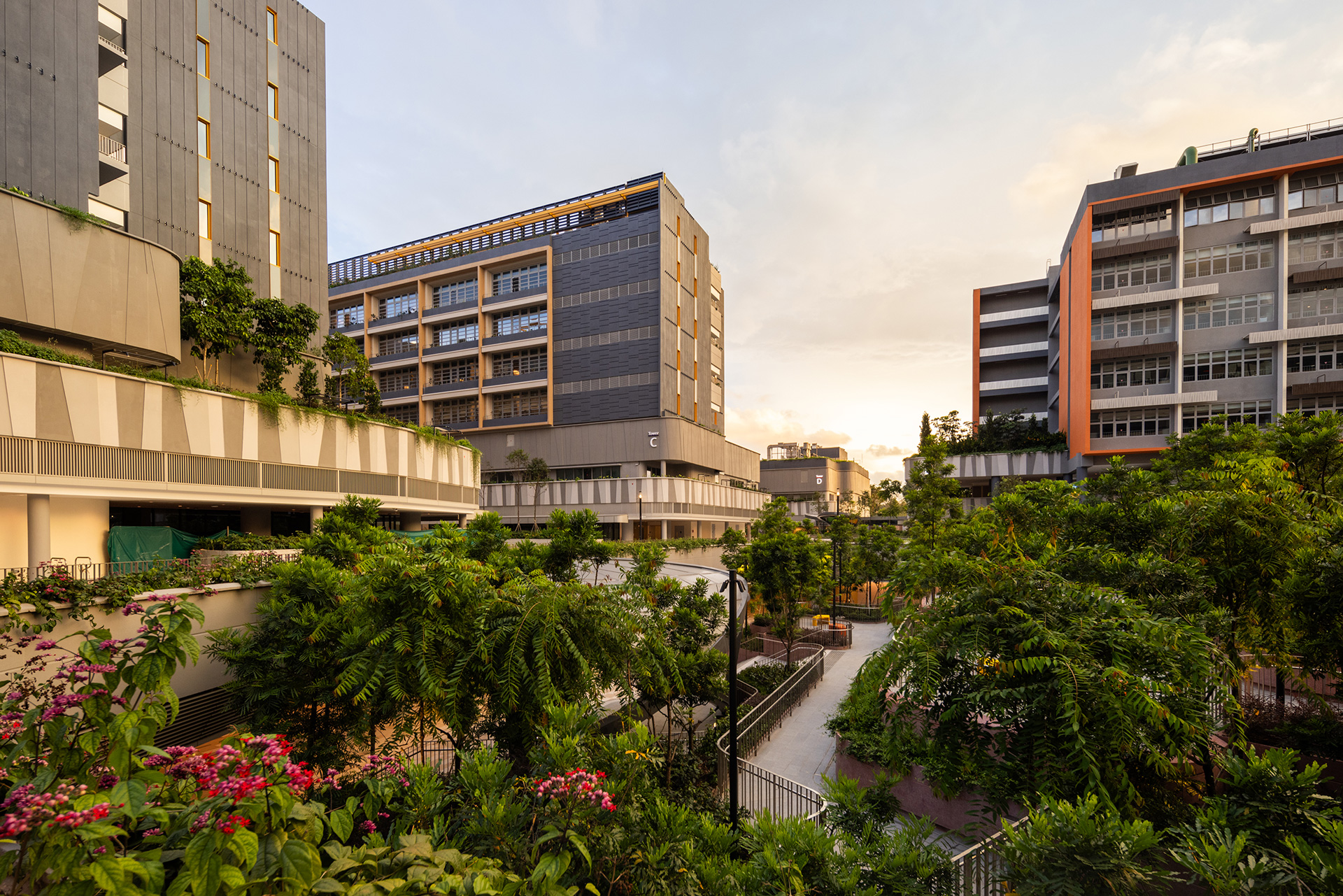
Woodlands Hospital is the first Singapore hospital to integrate dedicated parkland within its campus, harnessing the healing power of nature. This open campus design welcomes the wider neighbourhood to gather and enjoy its spaces, bringing a social dimension and vitality to the hospital grounds.
This community-centered approach underpins the new system-wide model of care, which engages community providers and home care teams to lessen dependence on hospital-based treatment.
-
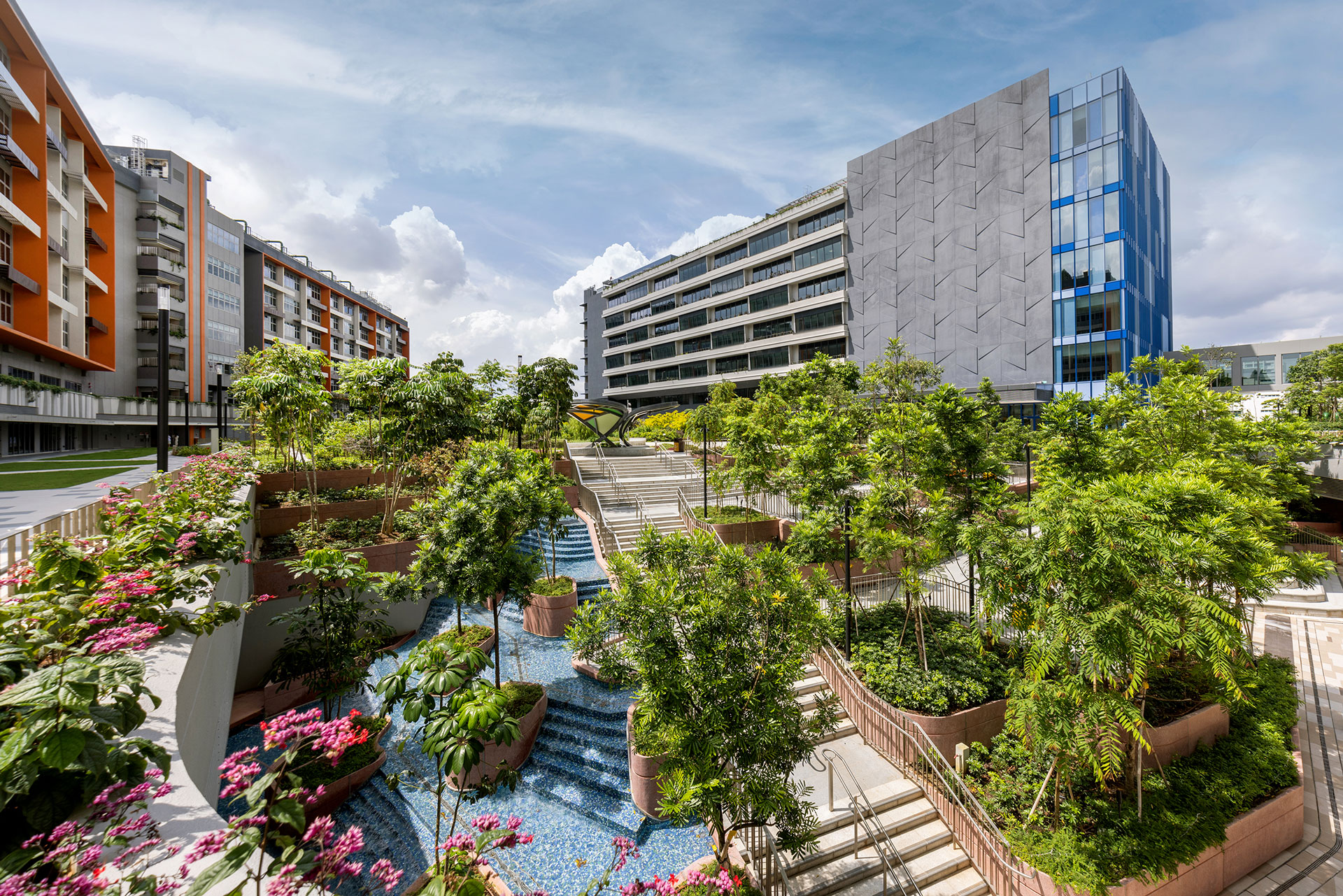
The boundaries of the original park were redrawn to extend the Healing Garden deeper into the campus, forming a green lung with cascading steps that double as a public amphitheatre and activity lawn for yoga and zumba.
-
Vehicular traffic is routed to the basement, freeing the ground level to become a spacious, beautifully landscaped public plaza for patients, staff, and the community. The Medical Centre is located near public transport nodes to encourage car-free access.
-
The Healing Garden also provides more introspective spaces, including rooftop gardens above the community hospital for gentle rehabilitation and a tranquil garden beside the mortuary where families can bid their final farewells.
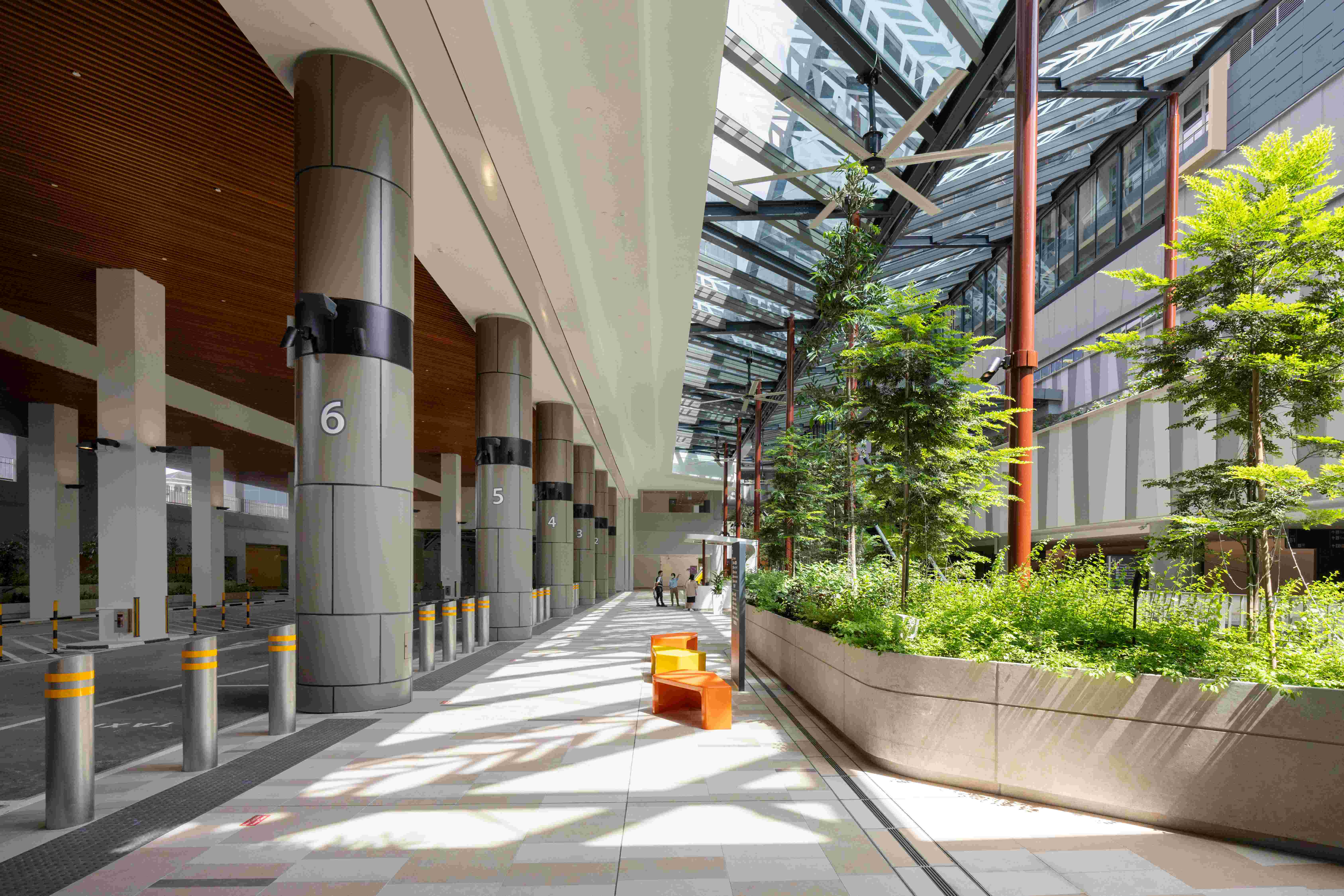
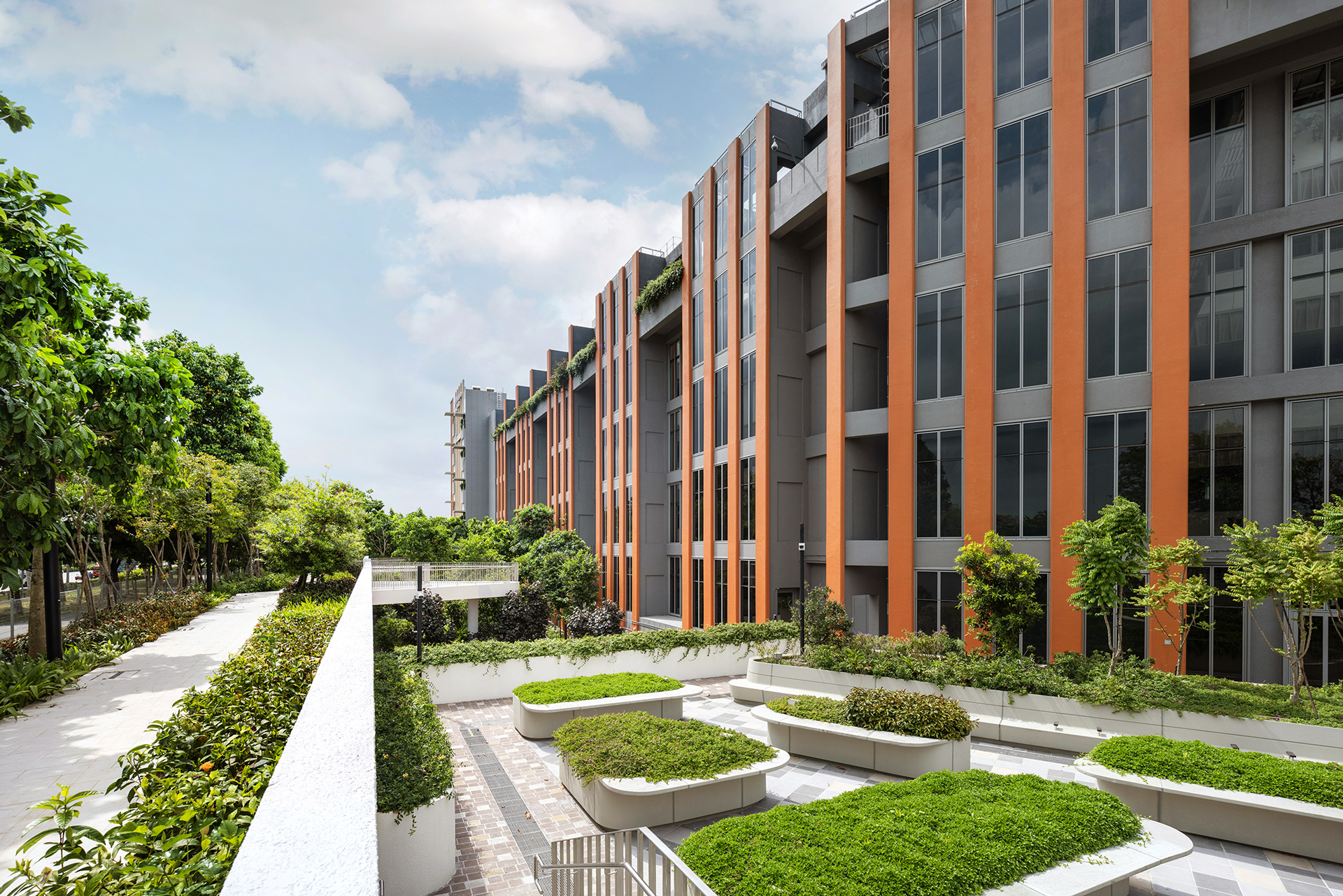
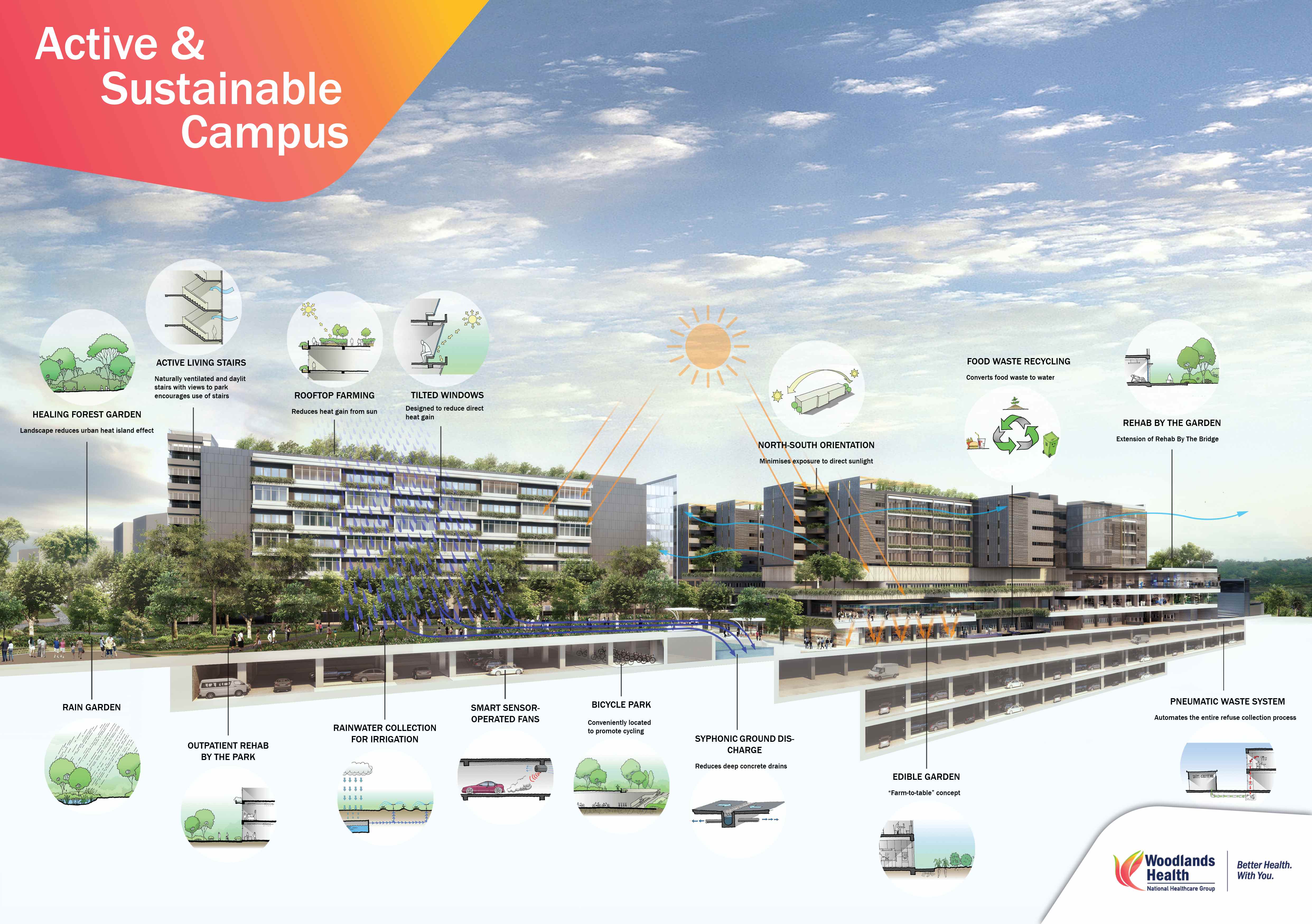
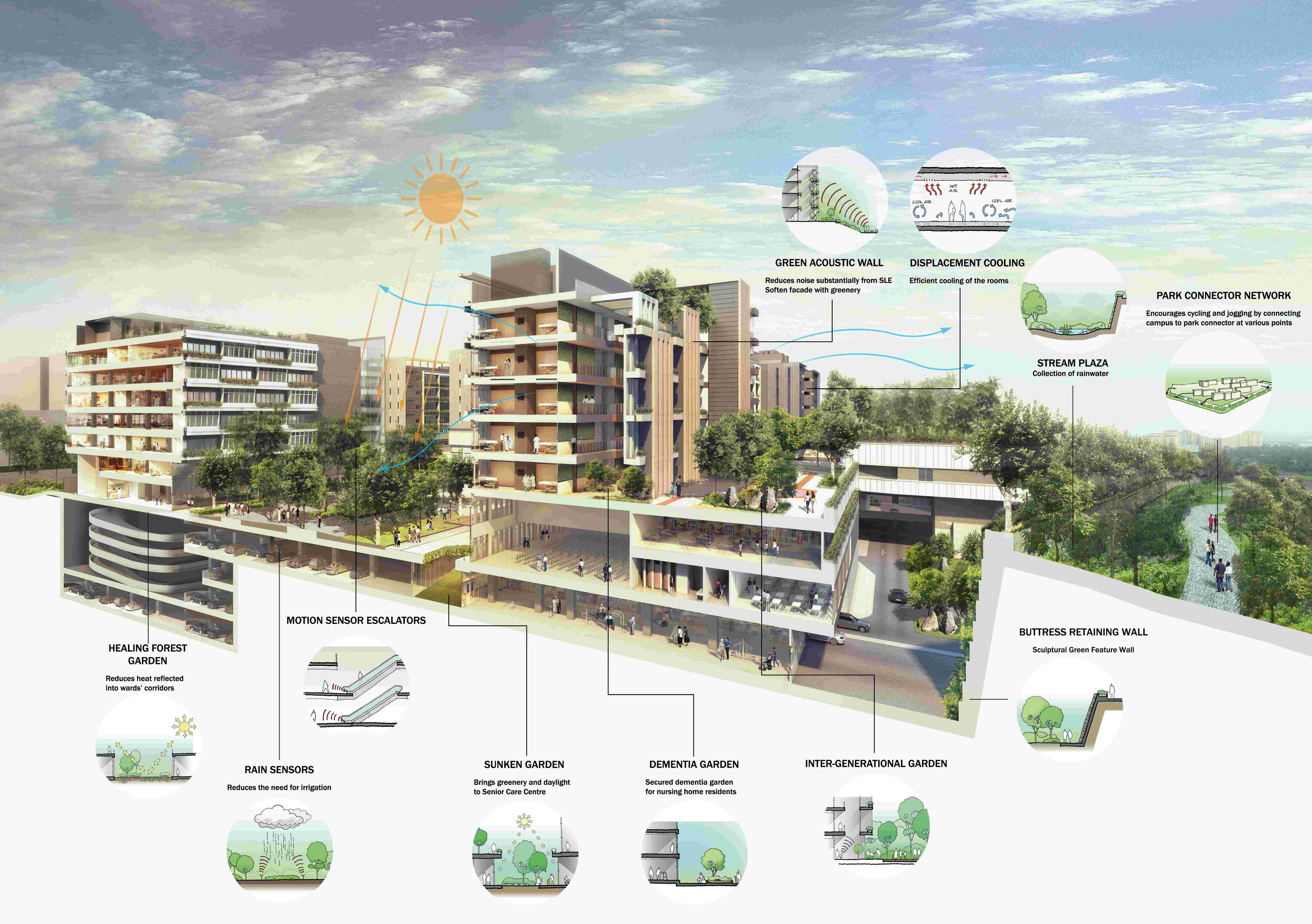
Form in Focus
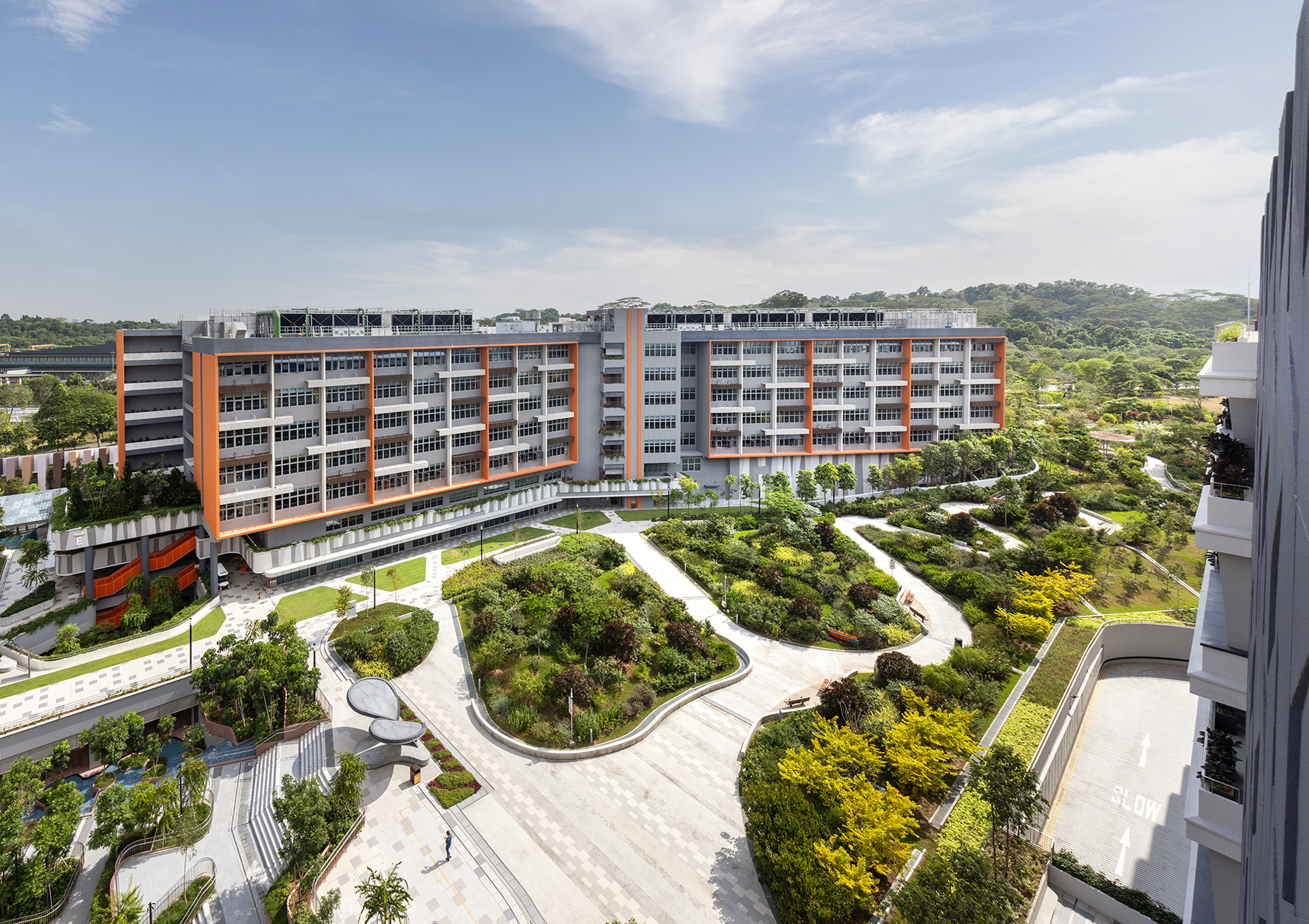
With a focus on environmentally responsive architecture, the campus employed a wide range of passive design strategies to enhance building performance and occupant wellbeing.
Studio Dialogue
with Michael Leong, Senior Executive Director, SAA Architects
Project Lead for Woodlands Hospital
What were some design strategies that allowed Woodlands Hospital to become a welcome asset to the neighbourhood?
Woodlands Hospital sets a new standard for what future hospitals can be — where healthcare is embedded within the social fabric. We wanted Woodlands Hospital to feel like a natural extension of the neighbourhood rather than an isolated institution.
“Drawing on biophilic principles from other projects, we designed campus spaces that encourage connection with nature as well as intergenerational social interactions.”
At the southern entrance, we integrated a bioswale (Rain Garden) to connect the hospital grounds with the Mandai Forest Trail just across the Seletar Expressway. This green gateway makes the hospital more approachable, drawing in Woodlands residents who were already using the park connector.
We also reimagined how spaces within the hospital could serve as active, community-centric environments. For instance, the long linear courtyard shared between the Nursing Home and childcare centre acts as an intergenerational spine where seniors and children naturally come together.
How does Woodlands Hospital approach healthcare differently?
Embracing the principles of salutogenesis¹ from the outset allowed us to focus on the positive health benefits that every space within the campus could deliver. Our design intent was to create a healing campus that actively supports the community’s wellbeing.
A key strategy is the harmonisation of the Acute and Community Hospital with the Nursing Home via a podium. This physical connector serves as an intuitive wayfinding device, helping patients and visitors navigate the expansive, open campus. This design approach introduced a framework for coherence and spatial clarity in an environment that can often feel overwhelming or disorienting.
What were some insights borrowed from other typologies that helped rearticulate the model of care?
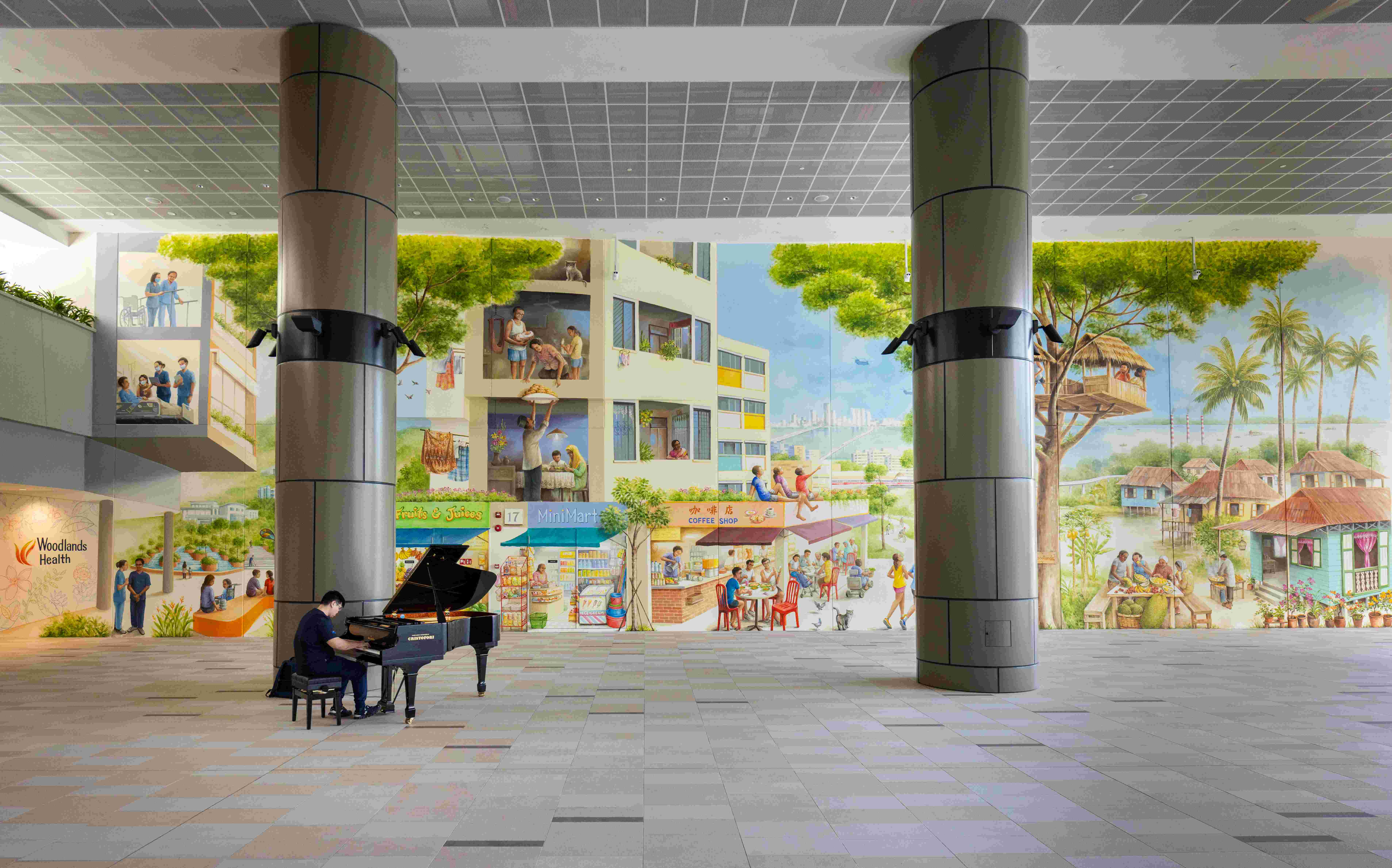
Beyond biophilic principles, we looked to adjacent typologies, particularly residential, to shape a more holistic, human-centered healthcare design. A central strategy is to imbue hospital spaces with the familiarity and comfort typically associated with the home environment. For example, the campus was intentionally designed to resemble the surrounding Woodlands public housing estates. Within the dementia wards, layouts include living rooms and bedrooms designed to recreate a sense of home.
¹ The concept of salutogenesis emphasises a strong Sense of Coherence through a human-centred approach. This philosophy prioritises comprehensibility, manageability, and meaningfulness in healthcare, enhancing the overall experience for everyone involved.