Harnessing Cold Energy to Drive Decarbonisation
At Singapore International Energy Week (SIEW) 2025, SJ partnered with Singapore LNG Corporation (SLNG) and Nanyang Technological University (NTU) to present cutting-edge advancements in Cold Energy utilisation, showcasing how Singapore’s LNG regasification infrastructure could play a part in powering a sustainable energy future, in a totally different way.
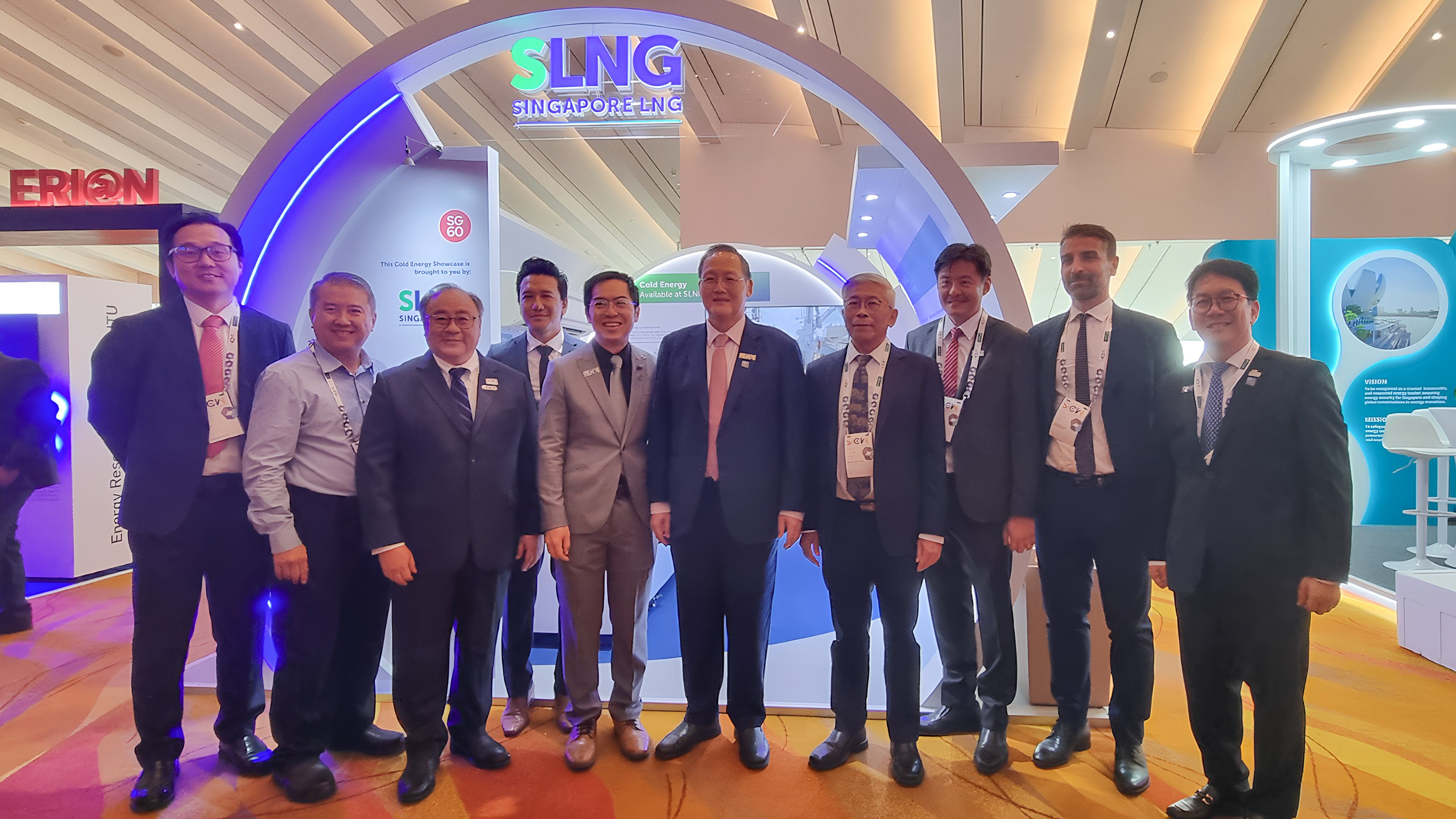
Cold Energy refers to the thermal potential in very low-temperature substances like liquefied natural gas (LNG). During the regasification process at the SLNG Terminal, LNG is warmed from -161˚C to approximately 20˚C. This significant temperature differential represents vast, untapped energy that can be harnessed for practical applications ranging from carbon capture and refrigeration to power generation.
With the SLNG Terminal operating 24/7, the Cold Energy available represents a substantial resource. Harnessing Cold Energy improves operational efficiency by turning what would otherwise be “wasted”, into a useful energy source. This helps to reduce dependence on conventional power generation, resulting in tangible savings in both capital and operational expenditures.
Cold Energy can also support decarbonisation goals by providing a natural and energy-efficient alternative for liquefying CO₂, reducing the need for mechanical refrigeration thereby helping to improve efficiency and reduce costs related to carbon capture and sequestration.
A highlight of the Cold Energy Showcase at SIEW was ColdBox, developed through the Surbana Jurong–NTU Corporate Lab at the Thermal Energy Systems Lab (TESLab) under the Energy Research Institute @ Nanyang Technological University (ERI@N). ColdBox uses novel advanced phase change materials developed @ NTU and mechanical design to store and transport cold energy efficiently at temperatures as low as -115˚C. It can be containerised for road and marine transport and integrated seamlessly with existing cooling systems to reduce electrical energy usage.
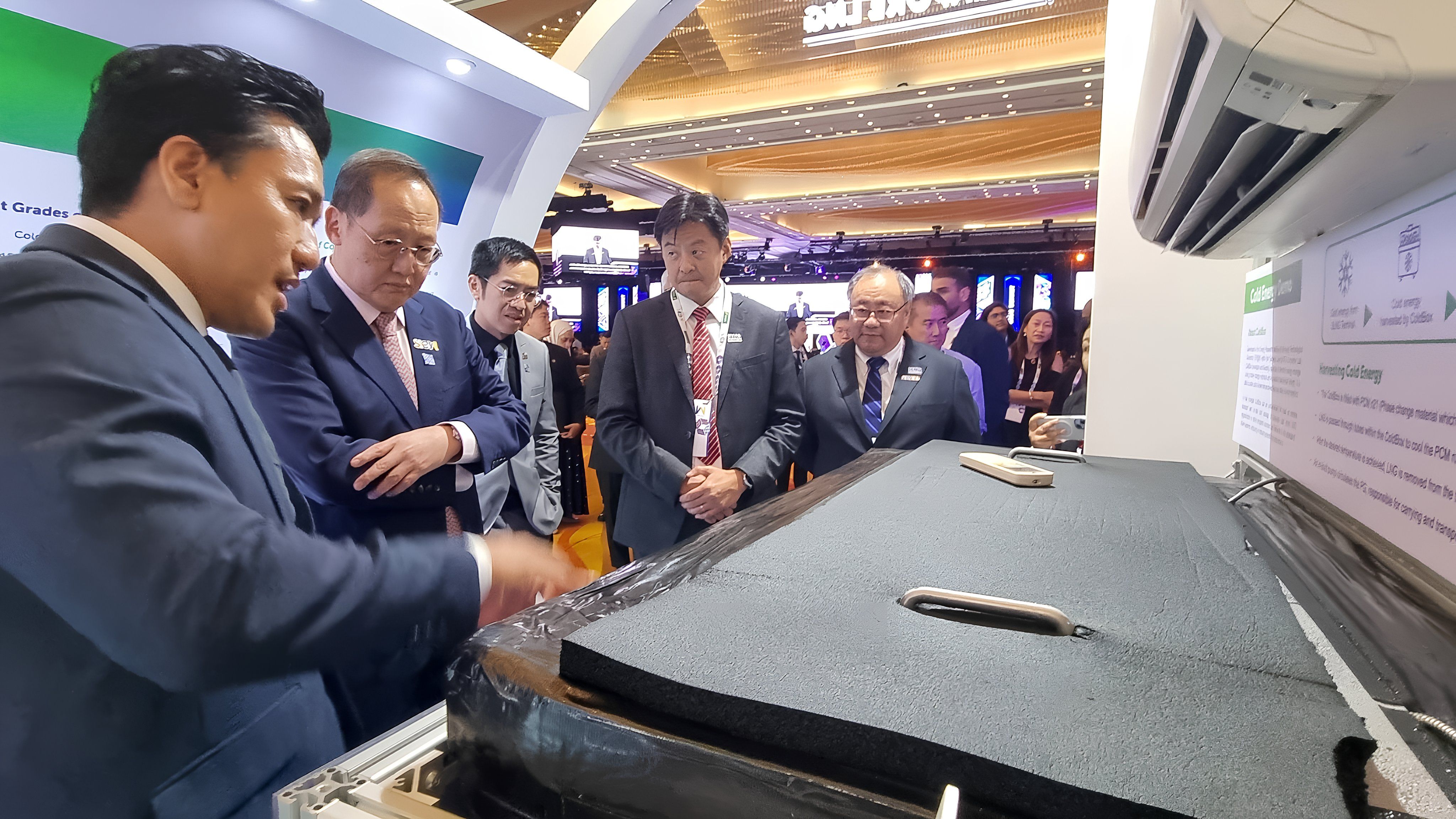
Visitors to the Cold Energy Showcase were able to experience for themselves how Cold Energy could be harvested and delivered to end users. These cutting-edge solutions boost efficiency, support climate action, and create new industrial opportunities.