SJ Group joins Network to Advance Renewable Energy Connectivity
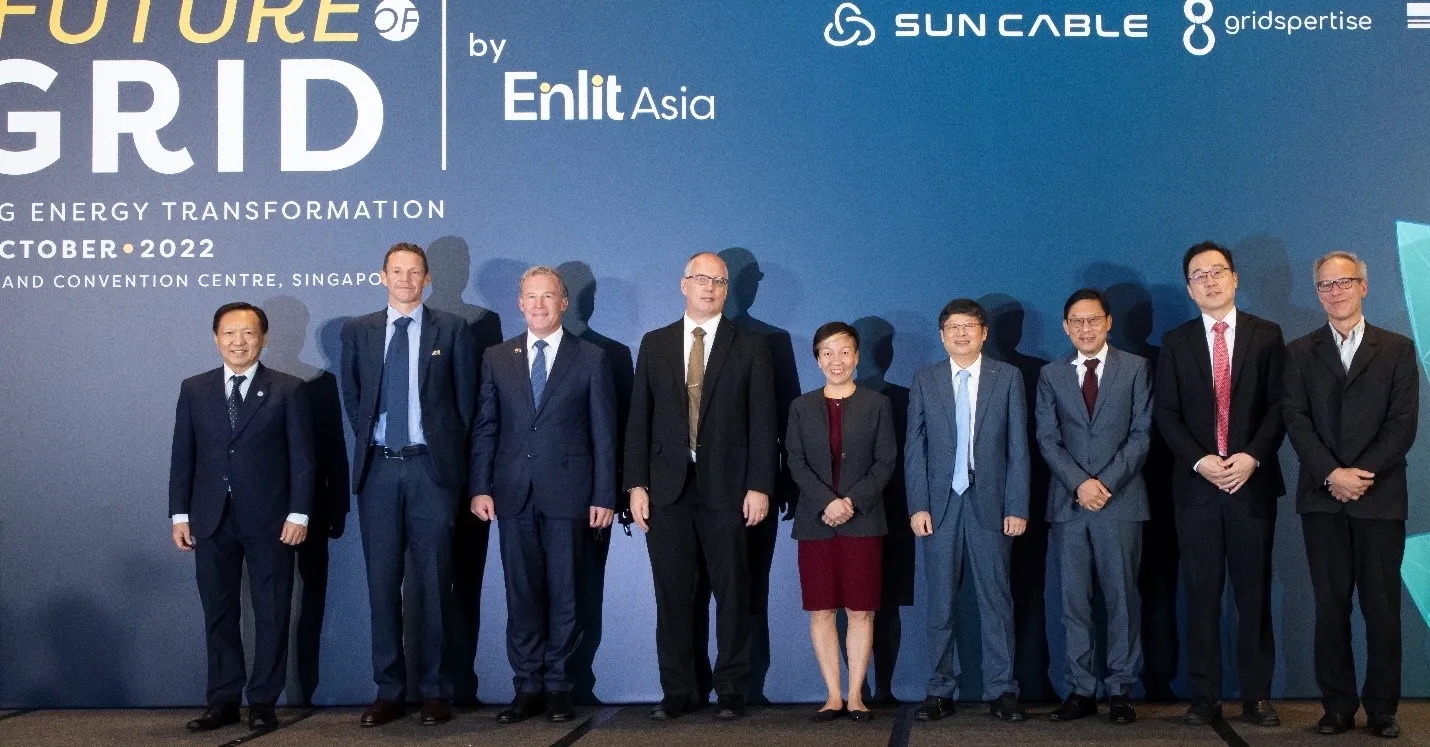
SJ Group is among the founding members of the Asia Green Grid Network (AGGN) to drive innovation in support of an interconnected electricity grid for the purpose of accelerating transmission of renewable electricity across Asia.
Green grids are carbon-free electricity grids transmitting power generated from renewable resources such as wind, hydropower, or solar energy. A regional green grid is a solution to power intermittency and affordable renewable power that could work efficiently and equitably for all countries involved.
The AGGN aims to address the fragmentation that exists in the current green grid research landscape regionally and boost collaboration to accelerate technology innovation and policy change within Asia, to support cross-border renewable electricity trade and an integrated grid.
Tan Wooi Leong, Managing Director, Energy and Industrial, SJ Group, said:
“The energy transition is rapidly gathering momentum across ASEAN, as we bring affordable, reliable, and sustainable power to communities we serve. The Asia Green Grid Network will facilitate the deep technical expertise, research and collaboration that are so critical to help our clients navigate the challenges of global energy transformation,”
The partners of the AGGN include Sun Cable, developer of the Australia-Asia PowerLink (AAPowerLink); the Agency for Science, Technology and Research (A*STAR); the National University of Singapore Faculty of Science; Nanyang Technological University, Singapore (NTU Singapore); Singapore Institute of Technology (SIT); SJ Group; University of New South Wales; University of Adelaide, James Cook University, and Charles Darwin University (CDU). Further research institutions and corporations will later be expanded to include institutions from other parts of Asia.
The AGGN supports three objectives:
- Education – Delivering seminars about key topics of green grid development, including high-voltage direct current (HVDC) transmission and policy best practices, promoting capability-building in Singapore.
- Collaboration – Bringing together leading research institutions, industry, and businesses to share knowledge and innovation ideas to improve green grid connections in areas including microgrids, grid integration and future storage technologies, long distance HVDC transmission amongst others.
- Innovation – Conducting collaborative research and development activities with partners.
The Network is organised around three thematic areas of research:
- Generation innovation: Understanding technology opportunities to scale and improve the cost efficiency of renewable energy generation.
- Transmission innovation: Understanding technology opportunities to improve the reliability, efficiency and implementation of HVDC transmission.
- Grid management and storage innovation: Understanding technology opportunities to enhance grid management and storage, including topics such as microgrids, carbon free back up and high-density energy storage systems.
Members and partners of the AGGN will contribute their expertise virtually through online seminars and forums. They will engage in research projects and benefit from a network of like-minded organisations who share a vision of having an integrated grid in Asia. Membership to the AGGN is open to any corporate or academic institution with a commitment to supporting cross-border renewable electricity trade and grid integration in Asia.
The AGGN has today also announced the launch of its introductory whitepaper, “Connecting Asia: One region, one grid”. Commissioned by Sun Cable, the whitepaper projects that by achieving 15% grid interconnection by 2040, an estimated 3,335 TWh, equivalent to US$493 billion of electricity, will be traded in Asia Pacific annually, generating 870,000 jobs in the region. Importantly, 3,070 MT of carbon dioxide emissions will be abated per annum.
The whitepaper reveals a range of technical opportunities to support a green grid in Asia. These include long duration storage, microgrids, and voltage improvements on HVDC transmission. The paper suggests that it is crucial to curate and share policy best practices from around the world that could inform the approach in Asia.